Publication Types
Abstract
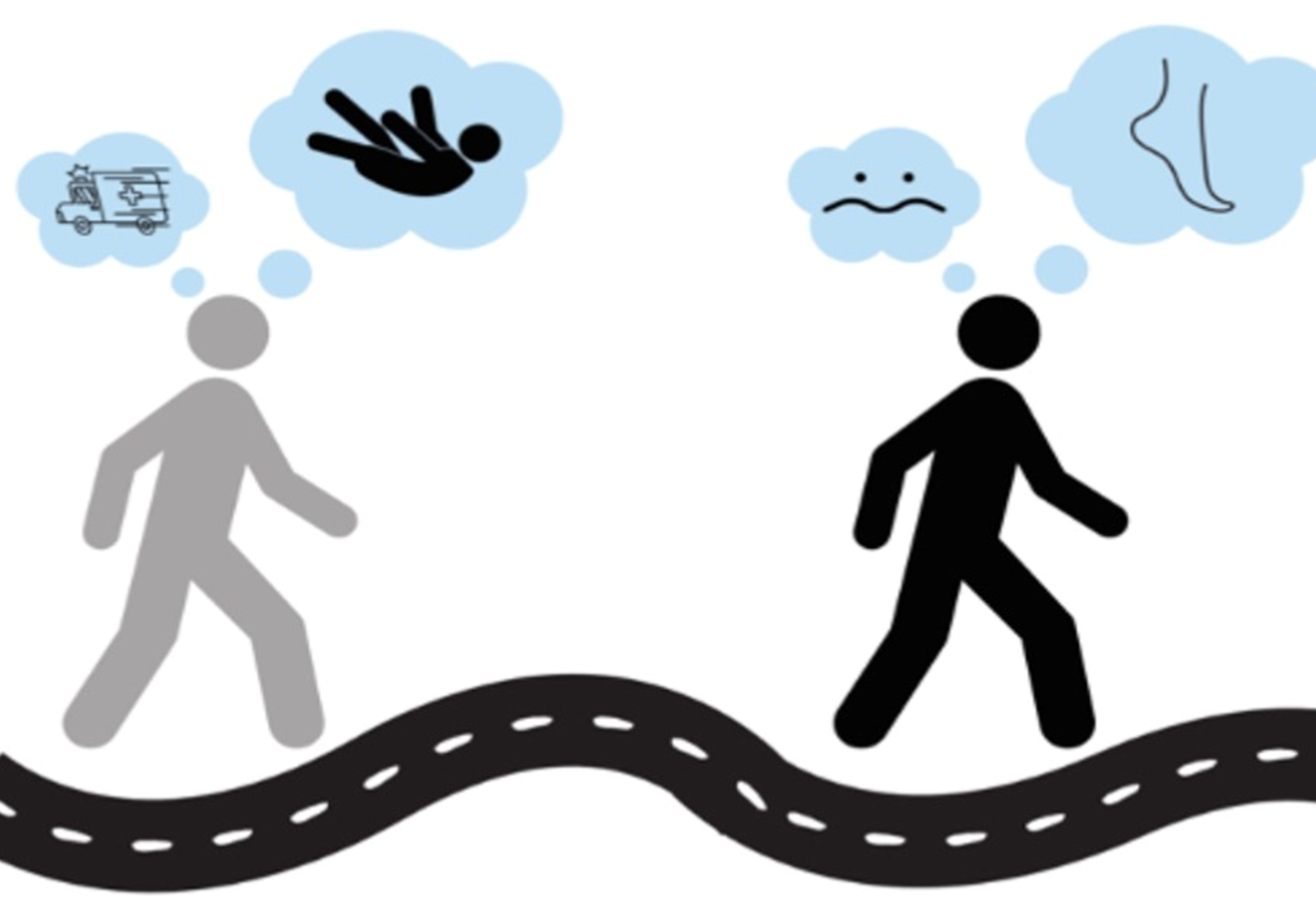
Walking and wayfinding rely on multiple cognitive processes, including spatial orientation and path planning. Previous research indicates that walking-related anxiety can hinder walking by diverting attention toward concerns about past and future falls, leading to inefficiencies in information processing. In this study we hypothesized that the link between gait-specific attention and cognitive processes key to navigation persists beyond walking. We administered the Perspective taking Spatial Orientation (PSOT) and Trail Making Tasks (TMT) and the Gait-Specific Attentional Profile (G-SAP) to 49 adults (26F, 44.2±20 y.o.). We found significant correlations for both the PSOT and TMT (part A) tasks with ruminations (PSOT: ⍴=0.35, p=0.021; TMTa: ⍴=0.34, p=0.019) and a significant correlation between TMT part A and processing inefficiency (⍴=0.30, p=0.038). Our findings suggest an important relationship between increased fall-related ruminations and reduced basic spatial cognition abilities, even when there is no walking taking place. We propose that these attentional mechanisms may affect gait through fundamental changes to how (and how quickly) spatial information is processed by the walker. Here, we identify spatial orientation and processing speed/tracking as pathways to explore further in fall-prone individuals.
Conference Name
Society for Neuroscience (SfN) Annual MeetingConference Location
San Diego, CaliforniaYear of publication
2025