
July 13th, 2026
A recent study conducted at Smith-Kettlewell found that the noise people accumulate over the years from day-to-day noise, even at everyday “safe” levels, is independently linked to measurably poorer hearing.
Highlights
- A Smith-Kettlewell study of 54 adults found that higher cumulative noise exposure was independently linked to poorer hearing, even after accounting for age.
- This link was established in ordinary people from many walks of life, not only those in famously loud professions, suggesting that routine, “sub-dangerous” noise accumulates.
- SK researchers propose a questionnaire developed at the University of Manchester known as the Noise Exposure Structured Interview (NESI) offers a practical way to gauge a person’s cumulative noise burden and flag hearing risk earlier.
Noise is nearly impossible to escape, and its toll is global. More than 1.5 billion people worldwide live with some hearing loss, a figure the World Health Organization expects to reach 2.5 billion by 2050. The WHO also estimates that more than a billion young people are at risk from unsafe listening alone.
Loud noise is a well-established cause of hearing loss. Less clear is what the everyday noise most people accumulate does over time: not a single deafening blast, but a lifetime of commutes, headphone use, droning datacenters, and leafblowers. A recent study from Smith-Kettlewell Eye Research Institute found that this cumulative exposure leaves its own measurable mark: independent of age, it was directly linked to specific changes in how well people heard.
The question Smith-Kettlewell’s Natela Shanidze set out to answer was whether the ordinary noise most people absorb every day, not just the obviously hazardous kind, leaves a lasting trace. Her team deliberately studied “regular” people rather than those already known to be at risk. “We looked at regular people across a variety of walks of life,” said Shanidze, who leads the Eye-Head Movement Lab, “not preselecting for those known to be affected by noise, like jackhammer operators.”
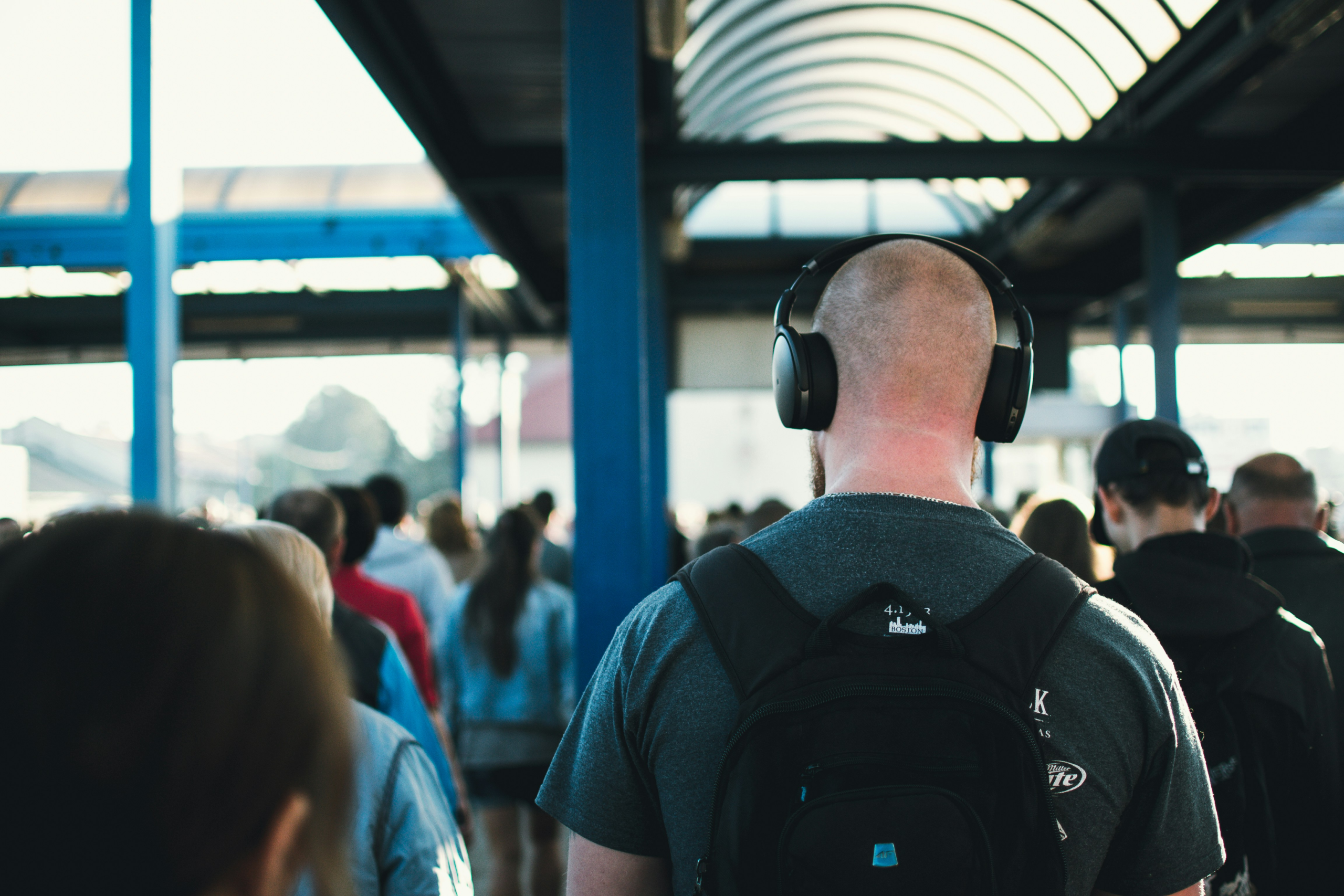
The noise in question is the ordinary kind that fills modern life: earbuds and headphones on the commute, city traffic and transit platforms, open-plan offices, kitchen appliances, and the ceaseless hum of HVAC systems and data centers. None of it feels dangerous in the moment, which is precisely why its cumulative toll is so easy to overlook.
Measuring a history of noise exposure
To put a number on cumulative exposure (the running total of all the sound a person absorbs over a lifetime, from workplaces and power tools to concerts and daily commutes), the team turned to the Noise Exposure Structured Interview (NESI), a questionnaire developed by a group of researchers at University of Manchester, Lancaster University, and the NIHR Nottingham Biomedical Research Centre. The survey walks a person back through their life and catalogs every meaningful source of sound, and the ear protection used against it: jobs, hobbies, concerts, power tools, firearms. Rather than asking vaguely whether someone has been “around loud noise,” the NESI estimates how loud each activity was and how long it lasted, across hours, days, and years, and folds the whole history into a single cumulative energy score. The result is closer to a cumulative noise budget than a snapshot.
The team paired that score with standard hearing tests. Pure-tone audiometry charted the faintest tones each person could detect across a range of pitches; speech-reception testing measured how well they could make out spoken words. Because the 54 participants spanned ages 23 to 82, the researchers could use statistical models to disentangle two influences that usually move together, estimating how much of a person’s hearing traced to age and how much to accumulated noise.
How does everyday noise exposure affect hearing?
The study points to a direct, independent link. After accounting for each participant’s age, those who had accumulated more noise still had measurably poorer hearing, a burden noise imposed on its own, beyond what aging explained. And it was specific rather than diffuse: the effect concentrated at particular frequencies, surfacing both in pure-tone thresholds (poorer low-frequency hearing in both ears) and in speech reception (more difficulty following speech in the weaker ear). Two people of the same age, in other words, could hear quite differently depending on the noise each had absorbed over a lifetime.
Where that effect landed was a surprise. Noise damage classically leaves its first mark with an audiometric notch around 3 to 4 kHz frequencies in people with a history of loud exposure. Here, the clearest independent signal started to appear lower in the range, widening the usual band we associate with noise damage.
“These results support our hypothesis that chronic, accumulated noise exposure, even when it’s delivered at sub-‘dangerous’ levels, can be deleterious to our ears and potentially our health. These findings are particularly relevant in the current age of chronic noise.”— Natela Shanidze
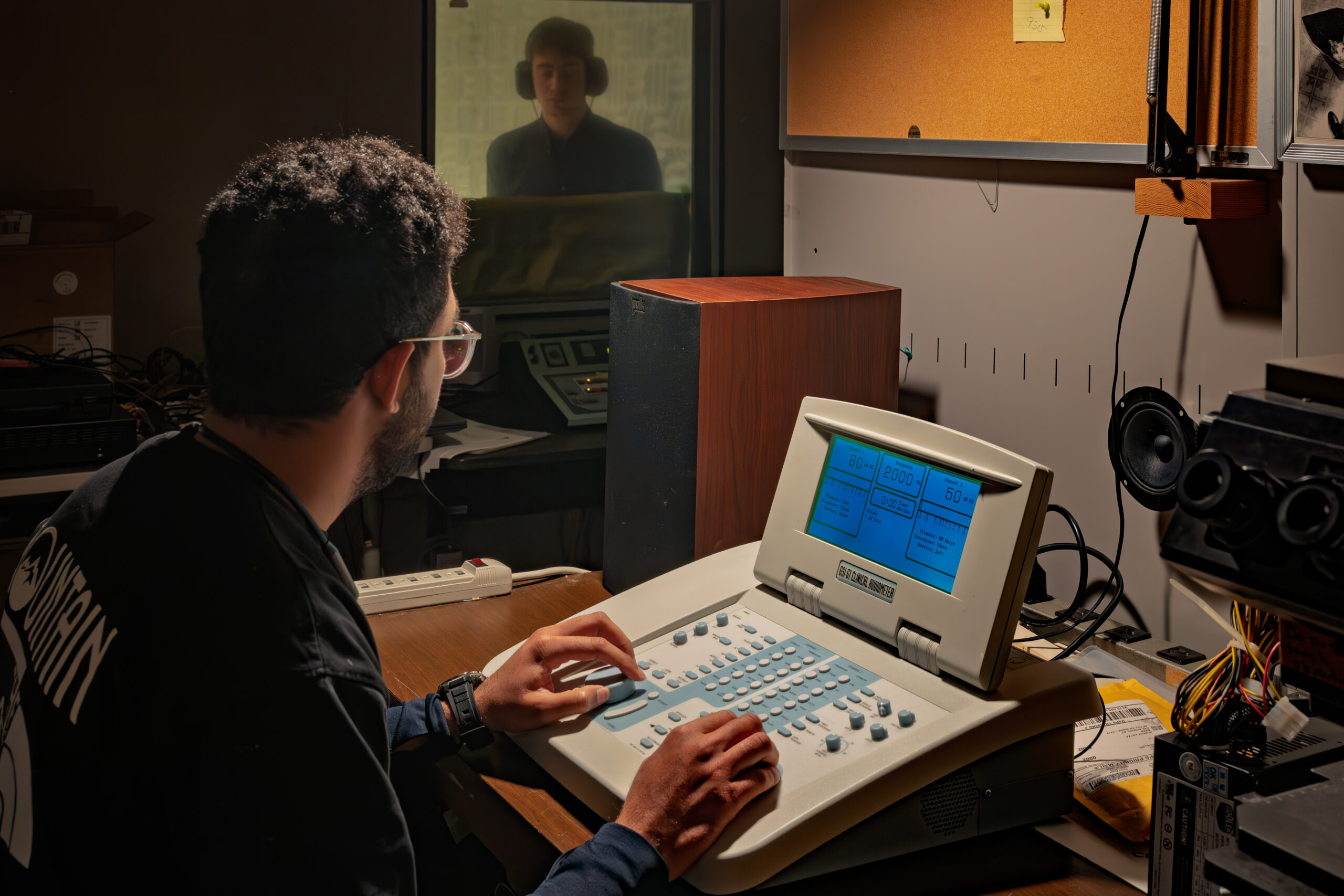
The damage need not be dramatic to be lasting. Like compound interest in reverse, ordinary exposures accrue quietly over decades, adding to the wear that age was already exacting on the auditory system. Much of that wear runs below the threshold of everyday awareness. According to Praveen Prakash, a co-author and audiologist on the study, a shift on an audiogram is a clinical signpost — not a verdict on how someone experiences sound: a person may follow conversations as easily as ever and still carry a measurable change, one the data registers before they would ever notice it.
That distance between what is measured and what is felt is part of why the finding matters, and it hints that the toll may reach beyond the ear. The sensory cells of the inner ear are only the first link in the chain. Researchers increasingly suspect that chronic noise also wears on the nerves and brain regions that carry sound and make sense of it. Those changes can outlast the noise that caused them, and may matter as much as the hearing loss itself — a possibility this study’s results help motivate, though not yet confirm.
Lowering the risk of noise-related hearing loss
The everyday arithmetic adds up quickly. Federal workplace limits permit up to 90 decibels, roughly a gas lawnmower, for eight hours a day, a dose enough to erode hearing over a career. And ambient noise keeps climbing, from traffic to the hum of data centers.
The practical payoff is the NESI itself: a structured, repeatable way to gauge a person’s cumulative noise burden, potentially early enough to act on. “The NESI gives clinicians something they haven’t really had before: a structured way to look back across someone’s entire noise history, not just what they’re exposed to right now,” said Prakash. “If we use it routinely, we could flag people at risk of noise-induced hearing loss long before it shows up in daily life, opening the door to targeted monitoring that catches the early signs of wear while there’s still time to act.”
The link is strong and holds independently of age, but a study like this shows association, not proof of cause; pinning down causation will take larger, longer studies. For Shanidze, though, the takeaway is already actionable. “This adds to the accumulating evidence that we should be more proactive in protecting ourselves from noise,” she said.
The hearing results feed a larger, NIH-funded effort into how cumulative noise affects the inner ear, including the balance system the Eye-Head Movement Lab studies.
Support hearing and vision research at Smith-Kettlewell
Research like this depends on supporters like you. Your gift directly funds independent audiology and hearing research at Smith-Kettlewell — helping turn discoveries like this one into earlier detection, better protection, and real relief for the millions at risk of noise-induced hearing loss. Please consider making a gift today to power the next breakthrough in hearing science.
About the study
“Association between lifetime noise exposure and audiometric thresholds using the noise exposure structured interview” was published June 18, 2026 in Scientific Reports (open access). DOI: 10.1038/s41598-026-57598-9.
Authors: Natela M. Shanidze, Anca Velisar, Al Lotze, and Praveen Prakash (Smith-Kettlewell Eye Research Institute); Courtney Stewart (LTC Charles S. Kettles VA Medical Center, Ann Arbor); and Devin L. McCaslin (Department of Otolaryngology, University of Michigan-Michigan Medicine).
Funding: Supported by the National Institutes of Health, National Institute on Aging (grant R01AG073157). NIH-funded research like this turns public investment into practical tools for protecting health across the lifespan.
This research was conducted in the Eye-Head Movement Laboratory at Smith-Kettlewell.
About Smith-Kettlewell
Smith-Kettlewell is an independent nonprofit research institute advancing vision science, accessibility, and innovation to improve understanding, independence, and quality of life. Learn more at ski.org.
Learn more: Effects of noise exposure across the lifespan on balance and stability in older adults
Media contact: For Media inquiries, please contact Content@ski.org or Natela@ski.org
Projects

Effects of Noise Exposure Across the Lifespan on Balance and Stability in Older Adults
Falls in older adults are common, have high societal and monetary costs, often lead to injury and can even be fatal. It is known that noise can damage the vestibular periphery resulting in postural instability and compromised balance. This project investigates how natural aging is accelerated by lifetime noise exposure, and how that can lead to impaired vestibular function, contributing to propensity to fall.
Labs
 Eye-Head Movement LaboratoryOur laboratory is interested in how changes in visual and/or vestibular function affect eye/head coordination, balance, and mobility, particularly in aging. We are currently pursuing two main lines of research:...