
Advanced Psychophysical Methods for Comprehensive Visual Function Assessment
Thursday, July 25th, 2024 – 12:00 PM to 1:00 PM
Assessing visual function is a fundamental aspect of eye research. However, existing tests often face limitations due to their design...

Multisensory Information access and AI: Advancing opportunities for the Visually Impaired
Friday, July 19th, 2024 – 12:00 PM to 1:00 PM
Lack of timely access to information is a significant problem for the nearly 24 million blind or visually impaired (BVI)...

Deep neural networks as scientific models of vision
Thursday, June 13th, 2024 – 12:00 PM to 1:00 PM
Artificial deep neural networks (DNNs) are used in many different ways to address scientific questions about how biological vision works....
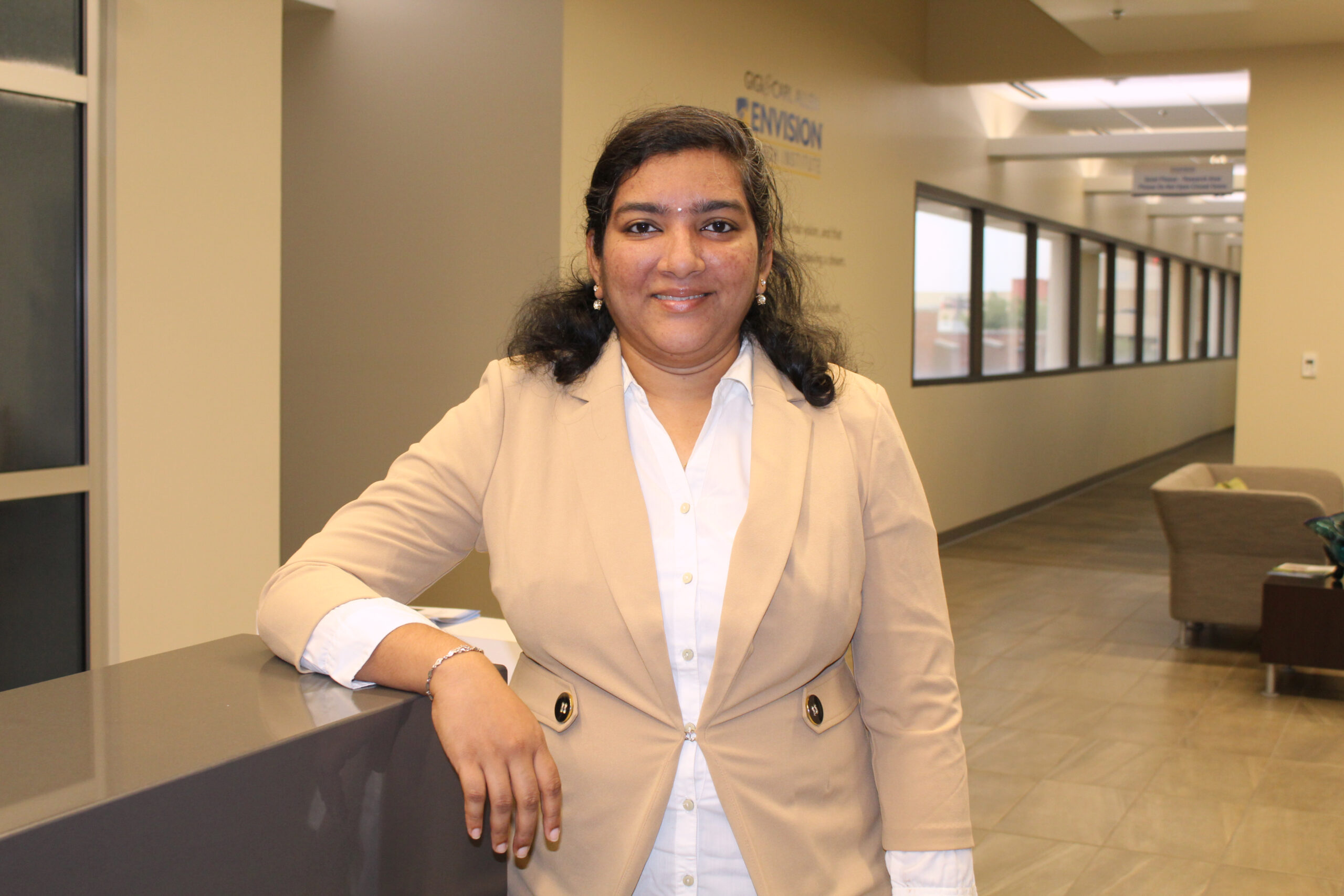
The Role of virtual reality and augmented reality technologies in low vision rehabilitation
Wednesday, May 29th, 2024 – 2:00 PM to 3:00 PM
Visual impairment refers to a condition where a person’s eyesight cannot be improved with medical treatment. Such individuals face difficulties...

Temporal instabilities in the human eye’s auto-focus mechanism: characteristics, source and impact on vision
Tuesday, April 30th, 2024 – 12:00 PM to 1:00 PM
Our eyes are never at rest. Between the microsaccadic eye movements and microfluctuations of the eye’s autofocus mechanism (ocular accommodation),...

A real-world visual illusion
Thursday, February 29th, 2024 – 12:00 PM to 1:00 PM
I will describe our research into a surprising visual illusion in which humans misperceive the shape of a highly familiar...

Improving recognition of cluttered objects using motion parallax in simulated prosthetic vision
Thursday, January 25th, 2024 – 12:00 PM to 1:00 PM
The efficacy of visual prostheses in object recognition is limited. While various limitations exist, here we focus on reducing the...

Vision across the gait cycle
Thursday, January 18th, 2024 – 12:00 PM to 1:00 PM
Walking, a fundamental human activity, presents challenges to visual stability due to motion blur induced by eye movements. The goal...
Neuroimaging Studies of Binocular Rivalry: How the brain changes its mind
Thursday, December 7th, 2023 – 12:00 PM to 1:00 PM
I will discuss human fMRI and MEG studies of binocular rivalry, including some recent work on individual differences. Alternations between...

Dual Sensory Impairment: Spatial Localization with Combined Vision and Hearing impairment
Thursday, November 2nd, 2023 – 12:00 PM to 1:00 PM
Dual sensory impairment (DSI) refers to combined vision and hearing impairment. DSI concerns a large population and its prevalence increases...

Visual perception, eye movements and visual field awareness after central vision loss: Evidence from patients with Macular degeneration, simulated scotoma, and visual training
Wednesday, October 25th, 2023 – 12:00 PM to 1:00 PM
Macular Degeneration (MD) represents the leading cause of visual impairment in the Western World. Late-stage MD eventually leads to the...

Stereoscopic vision in the praying mantis
Tuesday, October 24th, 2023 – 12:00 PM to 1:00 PM
Stereopsis – deriving information about distance by comparing views from two eyes – is widespread in vertebrates but so far...