
August 11th, 2026
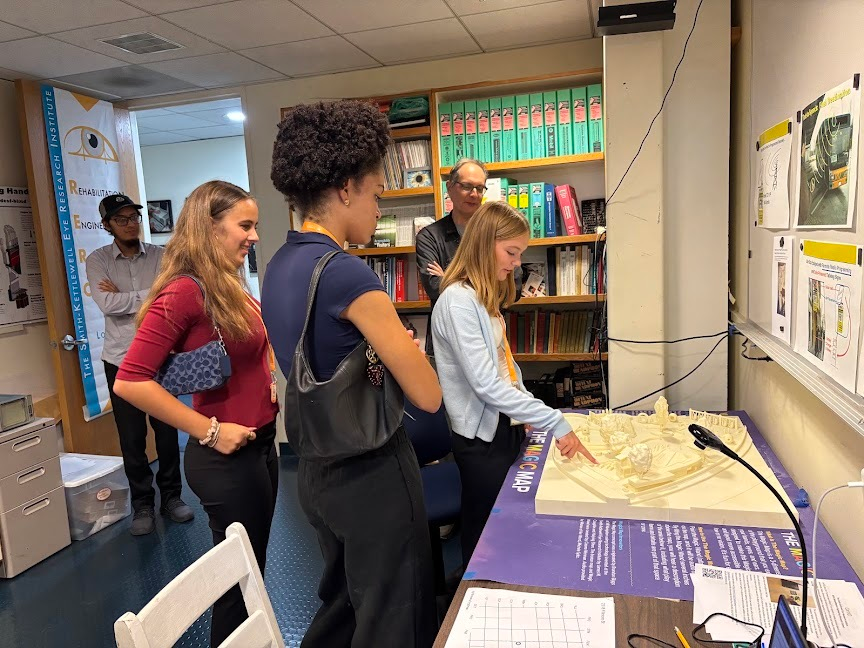
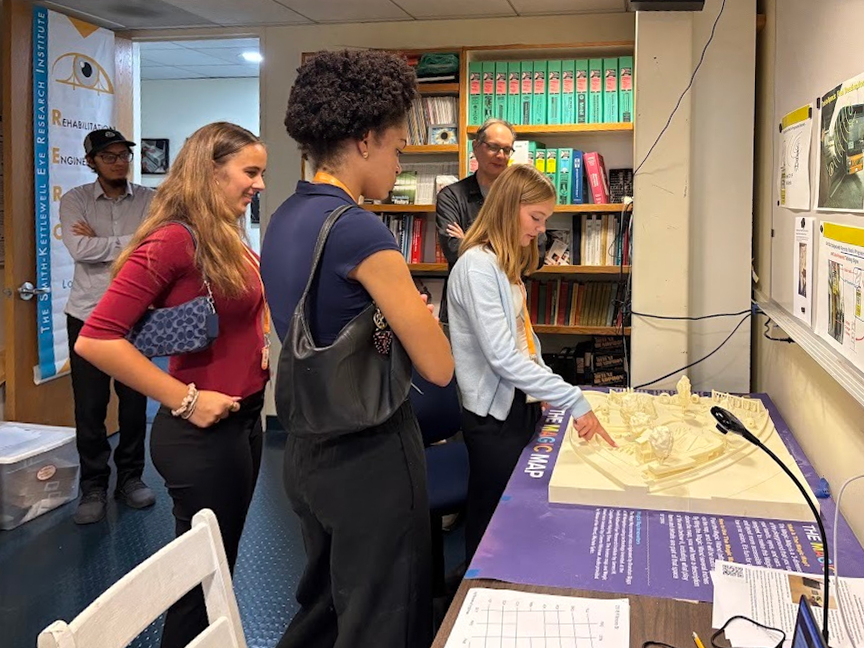
A student runs her fingertips across a small plastic model of a city center, tracing the streets one block at a time. She has never found her way through a place like this before, without looking. For a moment she understands something no lecture could quite deliver: how a person who is blind builds a map of the world by touch.
She was one of a group of high school students from Summer Springboard who spent a day this summer at the Smith-Kettlewell Eye Research Institute, getting a close look at how vision science is done, and who it is for.
Summer Springboard is a pre-college program that brings students in grades 9 through 12 onto university campuses for two-week, hands-on courses in fields like medicine, engineering, and neuroscience. Its Berkeley neuroscience students spend the session doing the real work of the discipline, from building model neurons to designing their own experiments. Getting out of the classroom and into the places where research actually happens is a signature part of the experience, and this year that included a visit to Smith-Kettlewell.
An independent nonprofit institute, Smith-Kettlewell has spent decades studying how vision works and building tools that help people who are blind or have low vision live more independently. Guided by institute scientists and staff, the students’ day ranged across three parts of the work here: the science of vision, the neuroscience beneath it, and the technology that turns discovery into independence.
Vision science: how sight works, and how it changes
The students pulled on glasses that simulate low vision and walked a marked course across the floor, discovering how much of ordinary movement leans on sight the instant it is taken away. Vision science at Smith-Kettlewell starts with exactly these fine mechanics: how the eye resolves detail, senses contrast, uses the edges of the visual field, and steers from one point of focus to the next. Conditions such as macular degeneration, glaucoma, and other causes of vision loss each disrupt that machinery in their own way, and mapping precisely how is what makes real help possible. It is painstaking, foundational work, and everything else the institute does is built on top of it.
Neuroscience: the brain behind what we see
Sight is also a matter of the brain. Around a motion-capture setup, the students watched how the eyes and head work together to hold the world steady as we move, a feat of coordination the brain manages constantly and without our noticing. For a group that had spent the summer on sensory systems and behavior, the point hit home: seeing is not the eye alone, but the brain making sense of what the eye sends it, choosing what to attend to and filling in the rest. Much of Smith-Kettlewell’s research lives in that space, asking how the brain assembles sight from raw signal, and how it adapts when vision fades, leaning on touch and sound to rebuild a working picture of the world. For students used to studying the brain in the abstract, it was a chance to see those questions pursued with real people and real stakes.
Technology: tools to create, navigate, and thrive
The tactile map one of them had traced at the start belongs to a long tradition of tools built here for people who are blind or have low vision: raised, 3D-printed maps that make a city legible by touch, camera-based systems that read signs and identify what is in front of you, and devices that speak the value of a dollar bill aloud. This work leans less on neuroscience than on engineering and design, and it is where the science leaves the lab and enters daily life, helping someone cross a campus, find a doorway, or handle money on their own. It is independence, built one careful tool at a time, and it makes plain that accessibility research is a field a young scientist can give a career to.
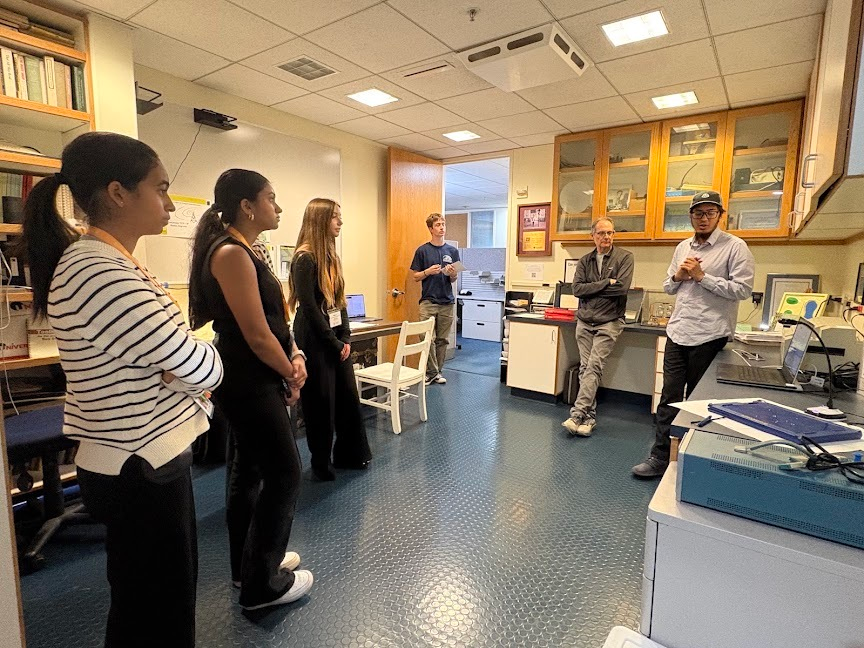
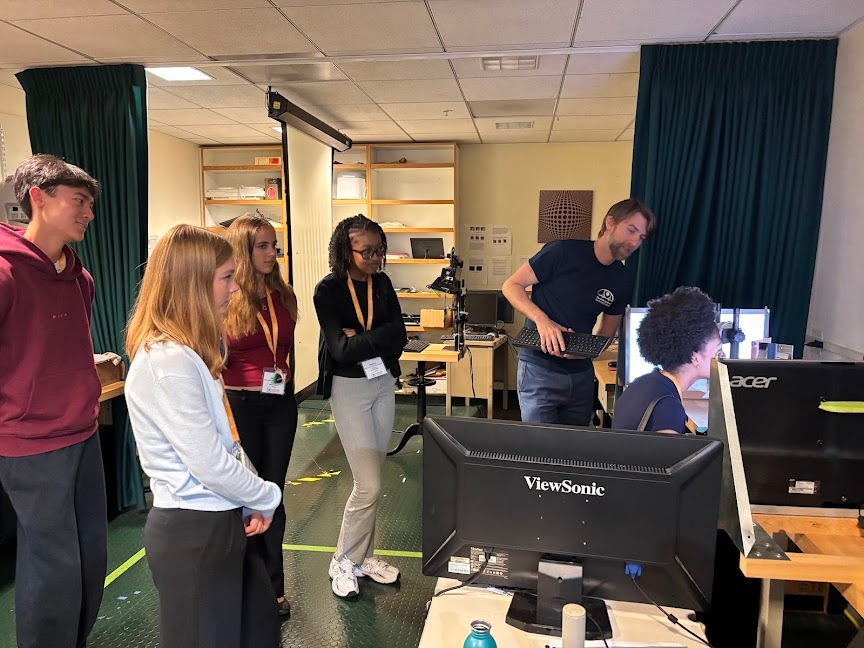
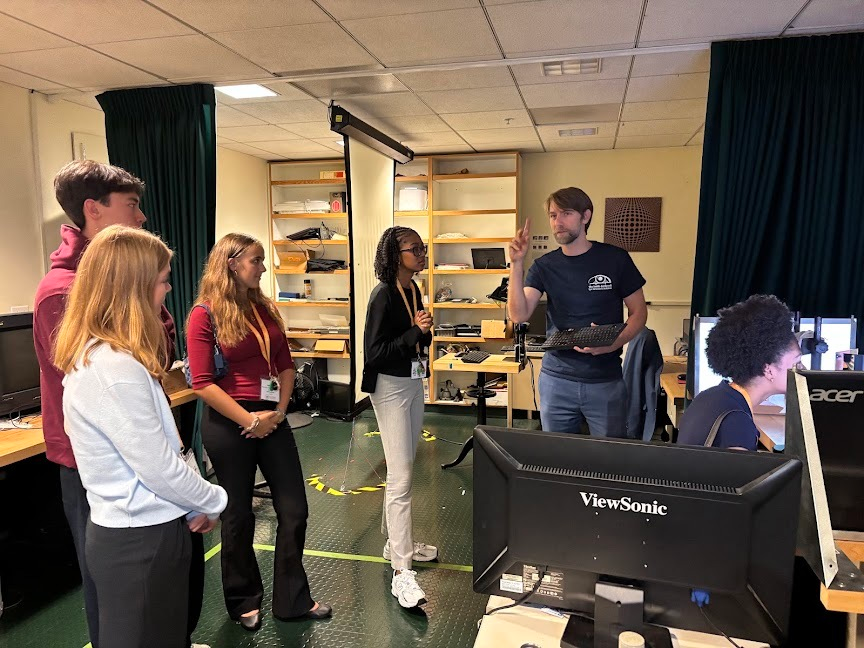
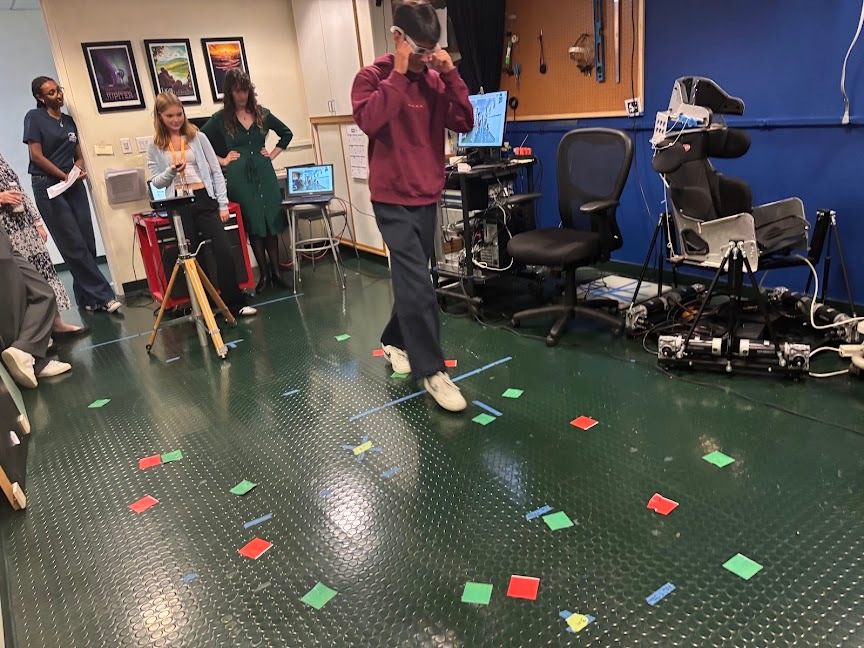
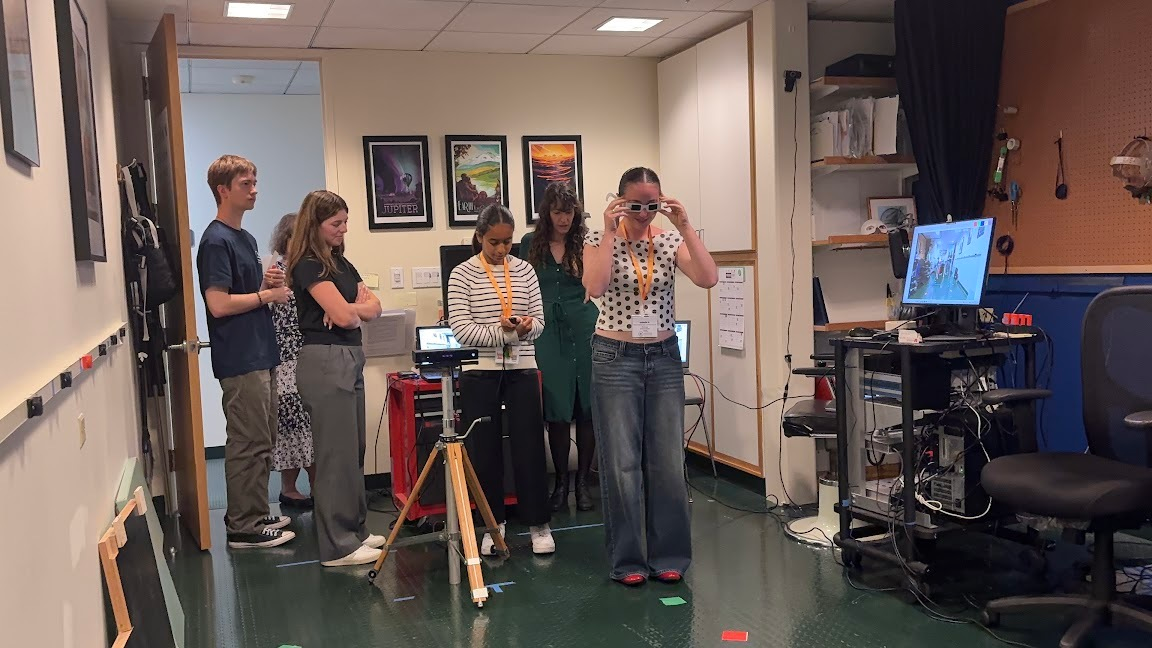
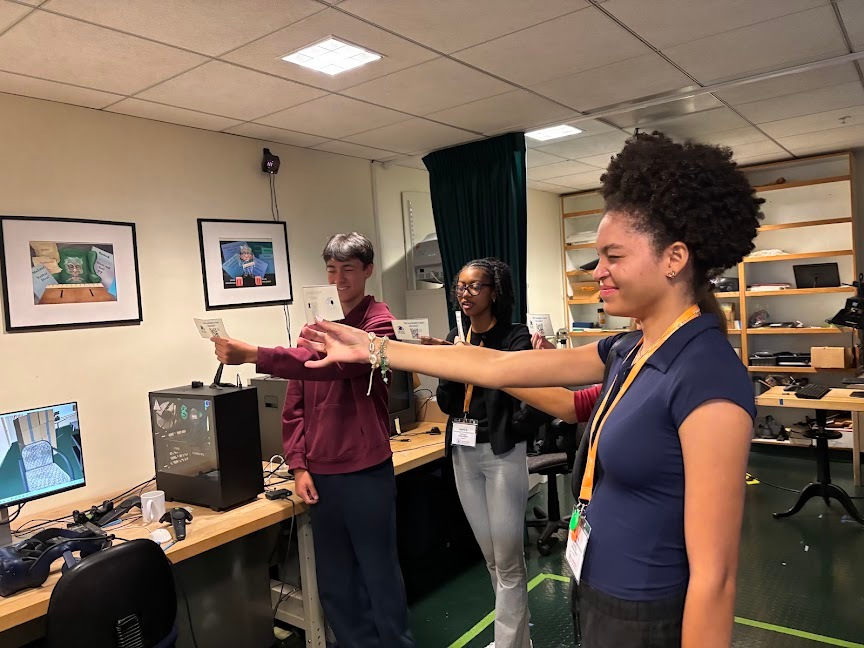
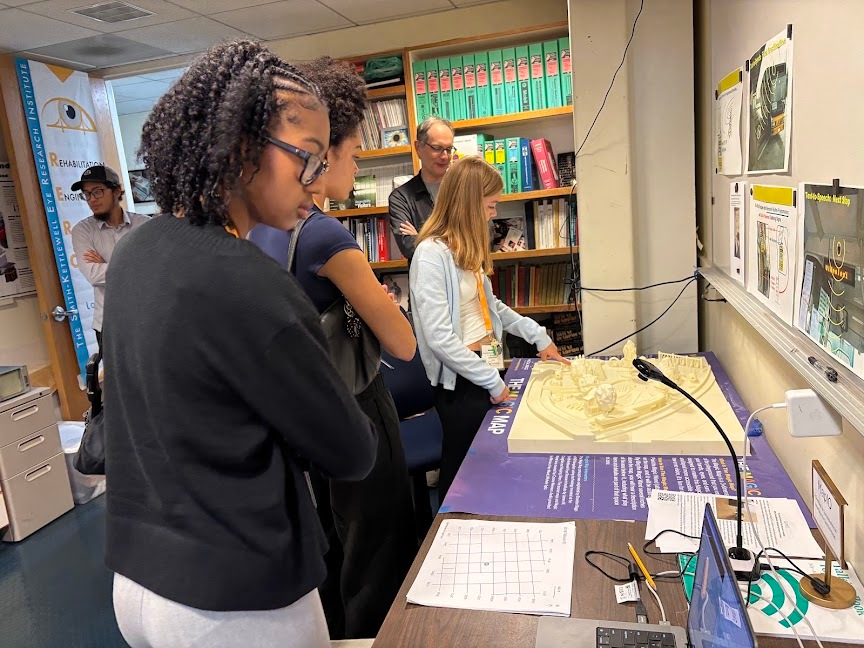
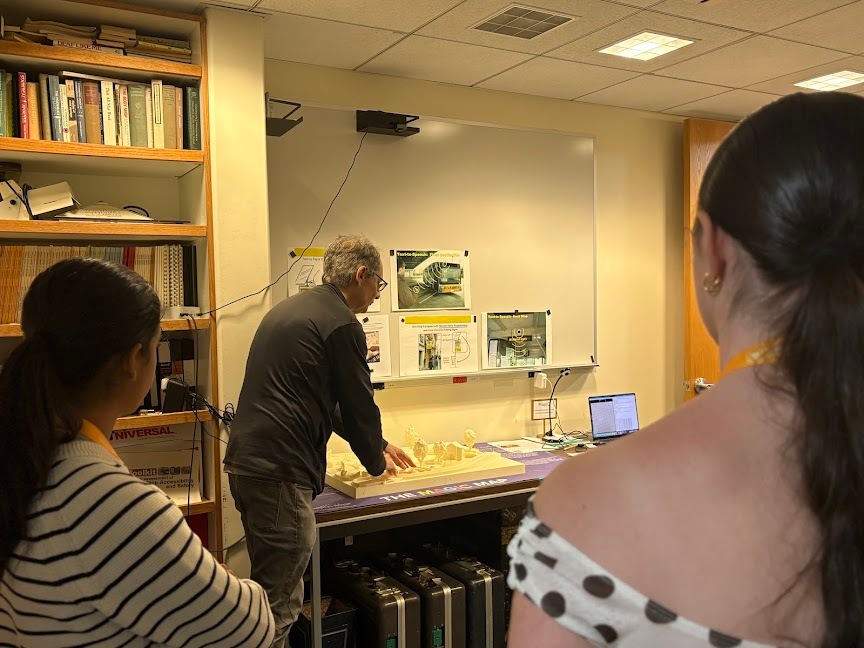
In a note to the institute afterward, the program’s team wrote that the students were “so inspired by what they learned,” and that everyone on the trip “shared how relevant it was to their in-class learning and interests.” Their instructor rated the visit a perfect ten out of ten for alignment with the course’s learning objectives.
Many students know they love science long before they know what a career in it looks like, or that a field like accessibility research exists at all. A few hours in a working lab can change that. A visit like this lets Summer Springboard put its students in front of research they could never replicate in a classroom, and lets Smith-Kettlewell share why its work matters with the people most likely to carry it forward.
Both sides are already talking about doing it again next summer. For an institute working to expand independence and possibility for people with vision loss, few things are more encouraging than a room full of young scientists who leave curious about how to help.
Welcoming students into the lab is part of how Smith-Kettlewell carries its science beyond the bench. Your gift helps sustain the community programs and hands-on visits that show young people what vision research can do, and supports the scientists, today’s and tomorrow’s, who make that work possible.
You can also explore the research these students saw, or find out how to take part in a study, at ski.org.
Media contact: Gaby Arias, Garias@ski.org
Labs
 Coughlan LabThe goal of our laboratory is to develop and test assistive technology for blind and visually impaired persons that is enabled by computer vision and other sensor technologies.
Centers
 Rehabilitation Engineering Research CenterThe Center's research goal is to develop and apply new scientific knowledge and practical, cost-effective devices to better understand and address the real-world problems of blind, visually impaired, and deaf-blind...