
Video-Based Speech Enhancement for Persons with Hearing and Vision Loss
Observing the visual cues from a speaker such as the shape of the lips and facial expression can greatly improve the speech comprehension capabilities of a person with hearing loss. However, concurrent vision loss can lead to a significant loss in speech perception. We propose developing a prototype device that utilizes a video camera in addition to audio input to enhance the speech signal from a target speaker in everyday situations.
Completed
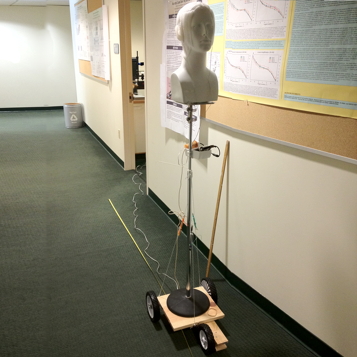
Acoustic Cues for Wayfinding
This project aims to do a detailed analysis of the environmental acoustic cues that help some blind navigate successfully.
Inactive
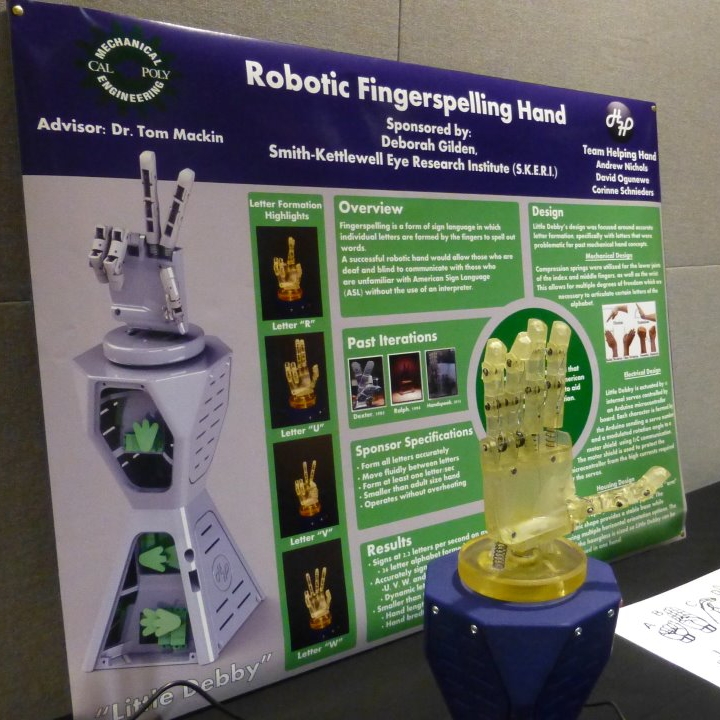
Robotic Fingerspelling Hand for Communicating with Deaf-Blind People
A robotic fingerspelling hand would give anyone who can type the ability to communicate with deaf-blind people who know tactile fingerspelling. It also would have the potential to provide computer access to deaf-blind people who do not read Braille.

Inactive
Low Vision Computer Access
Dr. Deborah Gilden wants to ensure that people who work with low vision students, clients, or patients, or have a visually impaired friend or family member, know that many features built into the Windows OS, MS Office applications, and the Internet, often can serve as tools for low vision computer access.
Fixational and Functional PRL in Central Vision Loss
Individuals with central vision loss (commonly due to age-related macular degeneration), must use viewing strategies using peripheral vision. Patients often adopt a preferred retinal locus (PRL) for visually guided behavior. While the are clinical measures for estimating the PRL, little is known about use in the real world. Our research seeks to characterize this natural behavior and inform visual rehabilation techniques.