
Active
CamIO Hands
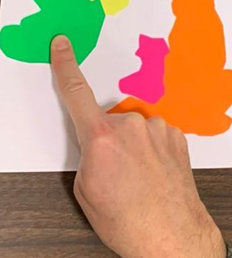
This project builds on the CamIO project to provide point-and-tap interactions allowing a user to acquire detailed information about tactile graphics and 3D models.
The interface uses an iPhone’s depth and color cameras to track the user’s hands while they interact with a model. When the user points to a feature of interest on the model with their index finger, the system reads aloud basic information about that feature. For additional information, the user lifts their index finger and taps the feature again. This process can be repeated multiple times to access additional levels of…

Active
Binocular rivalry as a detection tool for amblyopia
The project aims to develop a rapid, objective vision screening tool for identifying amblyopia in preschool children using abnormal binocular rivalry dynamics. Amblyopia is a leading cause of monocular vision loss, affecting 3.3% of the US population. Early intervention before age 7 yields better outcomes, making a scalable screening test for preschoolers an unmet public health need.
We investigate abnormal binocular rivalry dynamics as a behavioral biomarker for amblyopia in adults, exploring diagnostic power in a patient sample and determining the minimum rivalry data collection duration for…
Active
Binocular Rivalry and its neural processing in cortical hierarchy
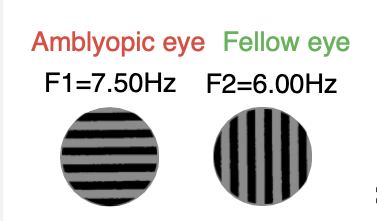
It has been a mystery as to what level of cortical hierarchy is suppressed in visual processing from the amblyopic eye and how neural representations change when increasing contrast or paying attention to the amblyopic eye. In this project, we will adapt a standard EEG binocular rivalry paradigm, which modulates stimuli at different frequencies in each eye and incorporates a behavioral measure of perceptual eye dominance. We will simultaneously measure neural activity along the cortical hierarchy and perceptual eye dominance under 3 conditions: equal contrasts in the two eyes, perceptually…
Active
CVIers Discussion Group for Parents and Older Children with Cerebral Visual Impairment
A discussion group for parents of children and parents and older children with Cerebral Visual Impairment (CVI) supported by clinicians, researchers and teachers of the visually impaired.
Next Meeting: Monday January 27th 2025 at 12pm to 1.30pm Pacific Time
Vergence and Stereopsis in Amblyopia & Strabismus
Vergence to disparity targets in the central visual field is impaired in individuals with amblyopia and strabismus.

Completed
Talking Signs
Created by William Loughborough in 1979, Talking Lights was a system of infrared transmitters and receivers allowing blind and visually impaired travelers to quickly and easily “read signs” at a distance.

Active
Empowering Data Vision: A Data Science Course for Blind Individuals Using R
The goal of the “Empowering Data Vision: A Data Science Course for Blind Individuals” program is to help people with visual impairments acquire advanced skills related to STEM subjects and careers.
Teng Lab Experiment Participation
Available experiments in the Cognition, Action, and Neural Dynamics Lab. Portal to signup form and description of studies in active recruitment.
Active
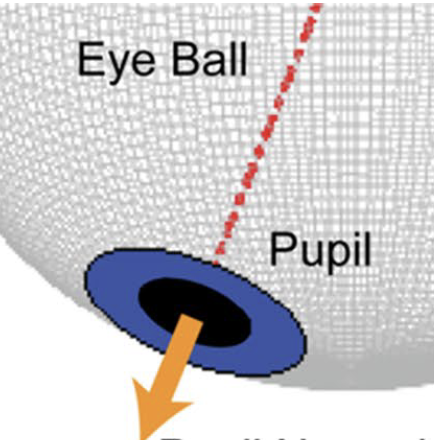
Challenges in Head-Free Eye Tracking in Health & Disease
This project is focused on investigating sources of error and potential improvement methodologies for head-free eye tracking, particularly in individuals with known oculomotor deficits
Active
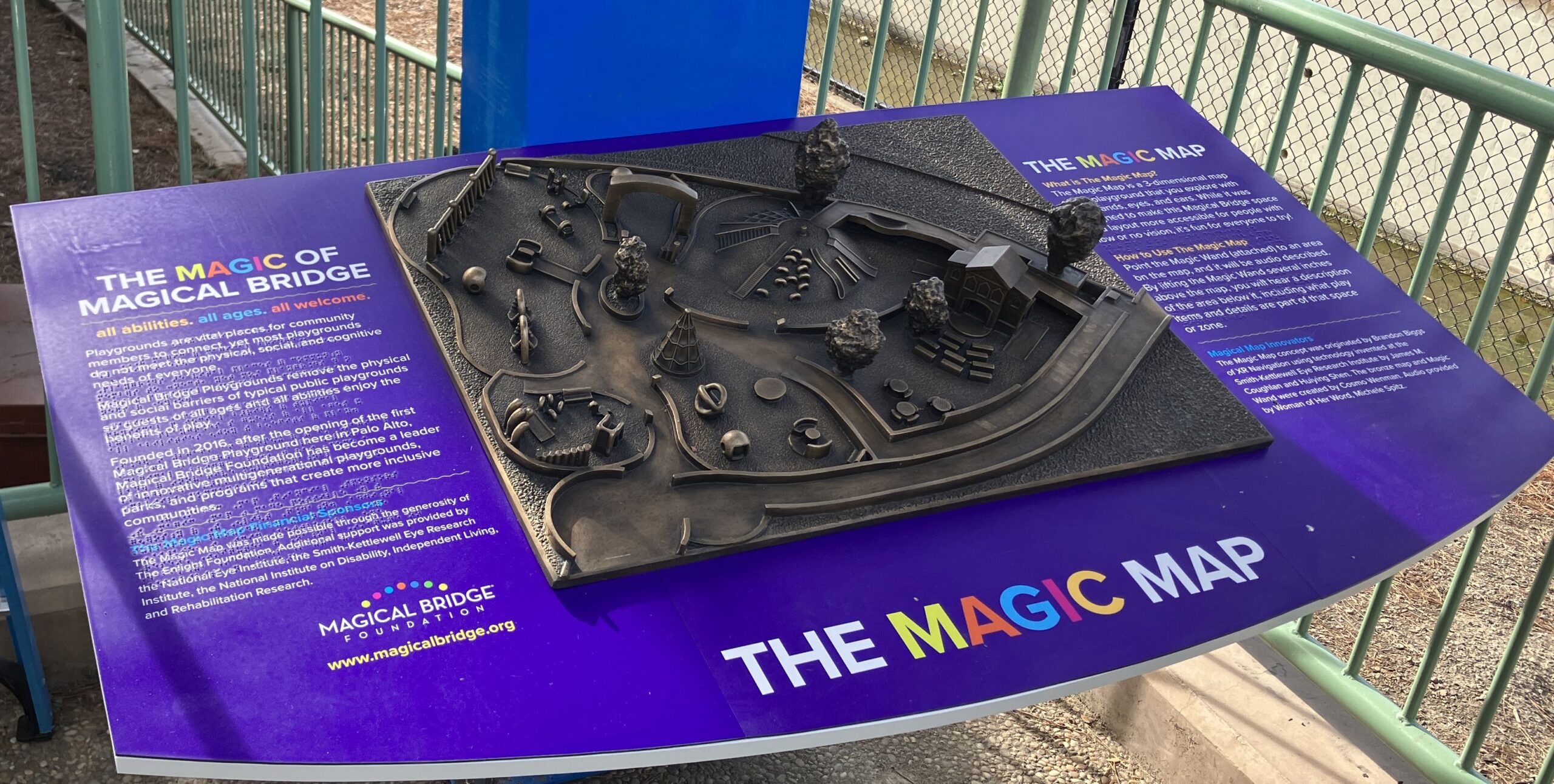
Magic Map
The Magic Map is an interactive 3D map installed at the Magical Bridge Playground in Palo Alto, California. It consists of a 1/100 scale 3D bronze representation of the playground, which includes over seventy play structures organized into multiple play zones and paths. When the user’s index fingertip touches a specific feature on the map, the name and description of the feature are read aloud in audio. This interactivity allows visitors with visual impairments to navigate the map without requiring them to read braille.