
Active
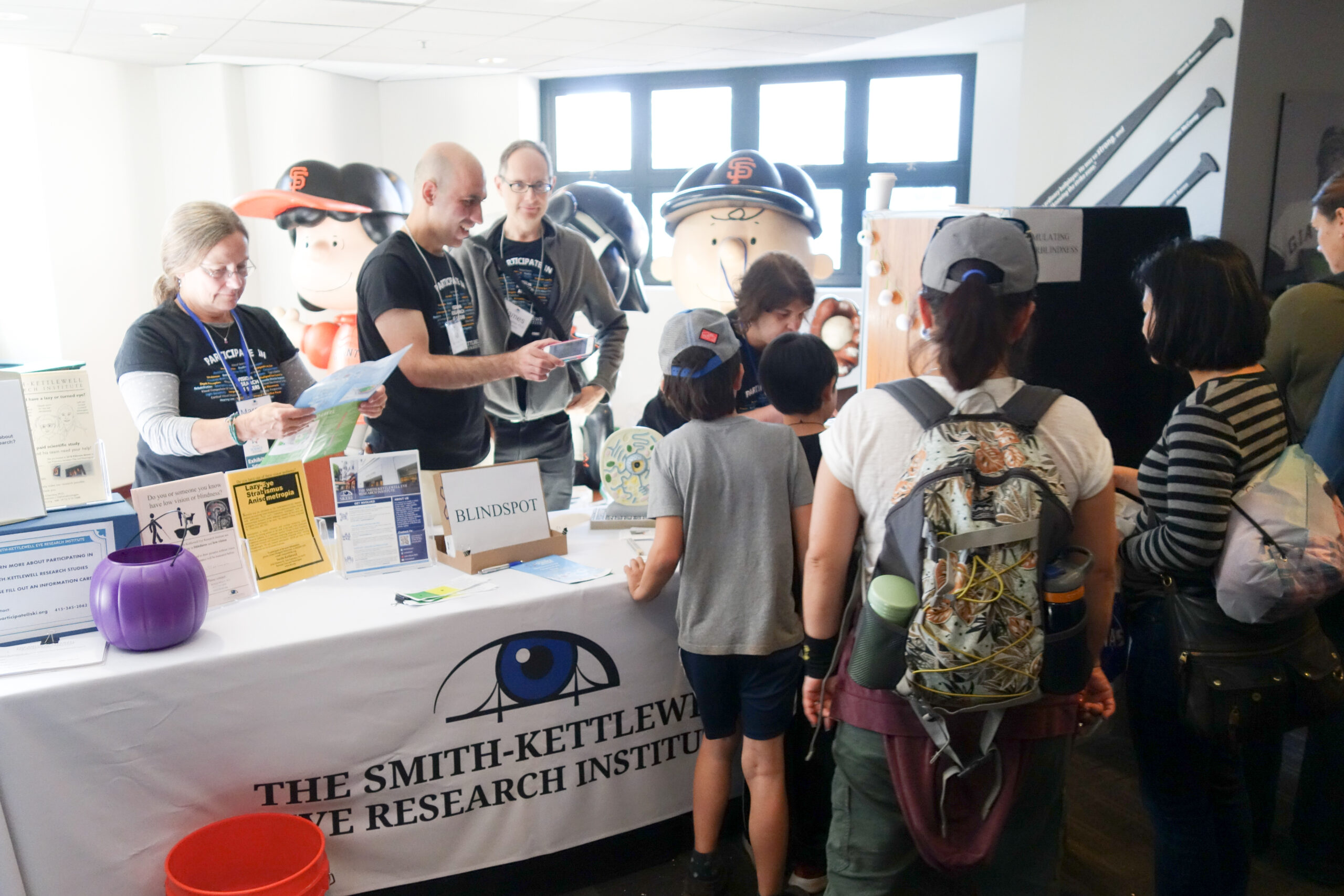
Outreach at Smith-Kettlewell
Smith-Kettelwell is deeply committed to supporting our community.
Please see the news tab for our upcoming and ongoing events. In the News tab, you will find information about our involvement in past outreach activities.
Active
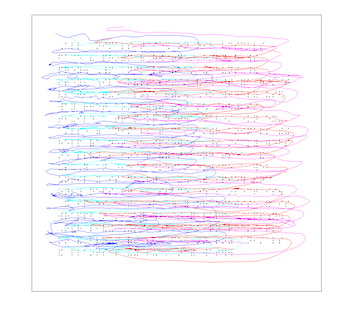
Haptic Kinematics of Two-Handed Braille Reading in Blind Adults
This page (currently under construction) accompanies a work-in-progress poster at the 2020 Eurohaptics meeting.
Active
Audiom
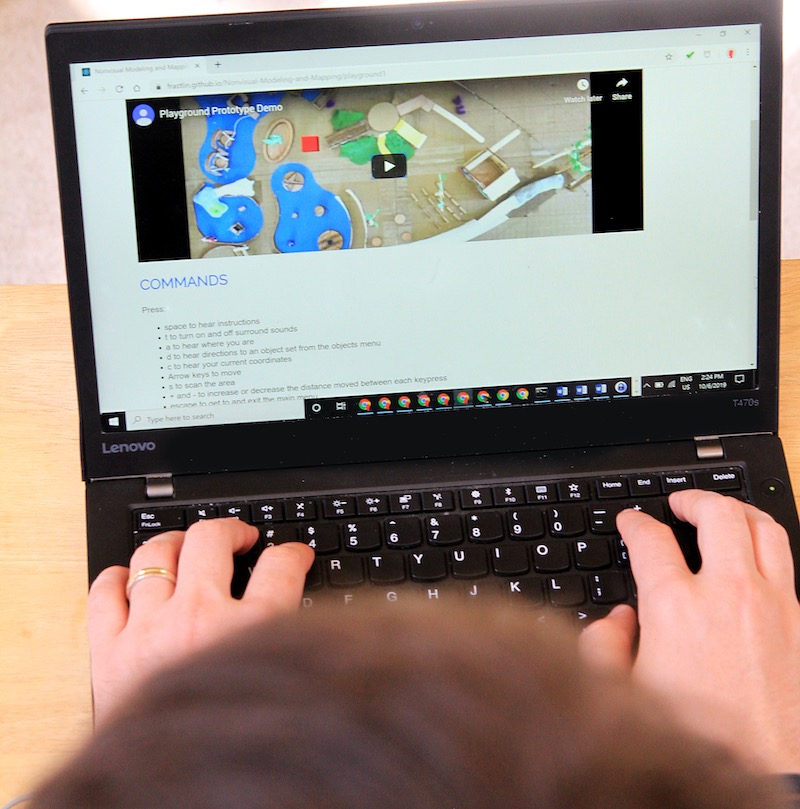
Audiom is a tool that allows blind and visually impaired individuals to view maps completely in audio. It is a web component and can be embedded into any webpage, similar to Google Maps. It allows non-visual use of route, landmark, and survey knowledge, which is the critical information needed for navigation.
Active
Tracking a target in depth with central field loss
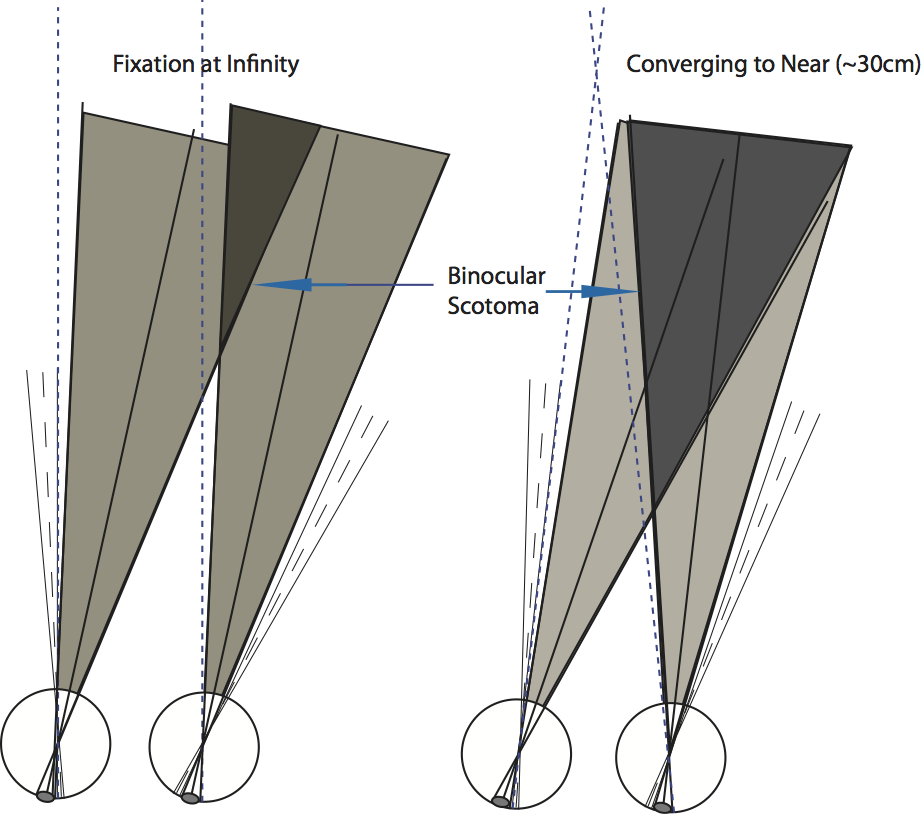
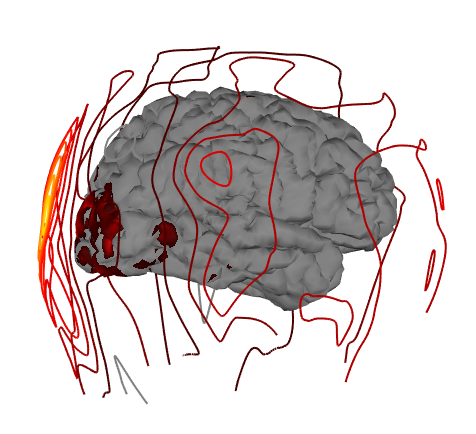
Bilateral field loss due to maculopathy creates a scotoma that extends in depth — a volume scotoma. Morevoer the size of the scotoma depends on whether observers turn their eyes to track a target as it comes closer. This project investigates how the volume scotoma affects the ability to track oncoming targets in these individuals, and in controls with a simulated volume scotoma.
Active
Multisensory Interactions Between the Primary Sensory Cortices
Under construction!
Reverberant Auditory Scene Analysis
The world is rich in sounds and their echoes from reflecting surfaces, making acoustic reverberation a ubiquitous part of everyday life. We usually think of reverberation as a nuisance to overcome (it makes understanding speech or locating sound sources harder), but it also carries useful information, acting as a signature of the space it fills. Reverberation can tell us how big a room is, where we are inside it, and whether there are objects nearby. This has important implications not only for auditory spatial perception in typical individuals, but also in people with sensory loss. Sound…
Oculomotor Control
The binocular coordination of movements of the eyes is a complex issue controlled by many brainstem nuclei, and is subject to a wide variety of forms of disruption by traumatic brain injury and oculomotor muscles disorders. The goal of this project is to characterize the natural range of the dynamics of the binocular ocuomotor system and their widespread disruptions across the spectrum of human ocolumotor control.

Active
Cerebral Visual Impairment (CVI): An in-depth study of visual functioning in everyday life
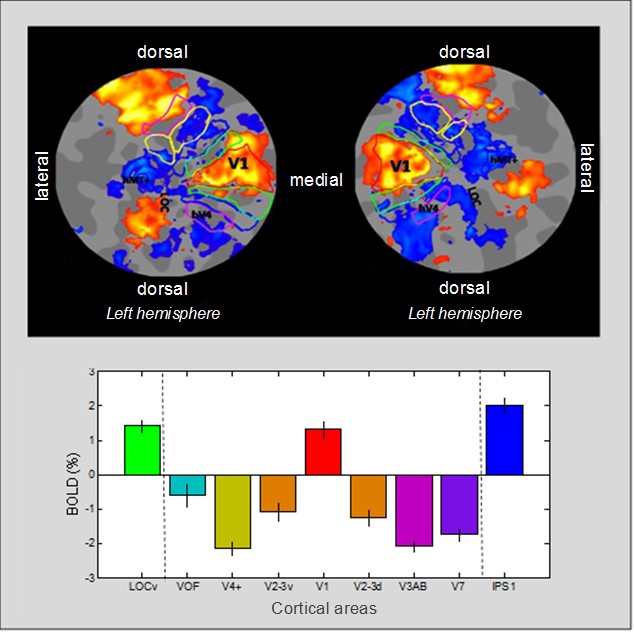
The purpose of this research study is to learn about how cerebral visual impairment affects everyday visually guided behaviours and determine interventions to treat the difficulties. This study is conducted remotely through telephone or video link and also in person at the laboratory.
Active
Harnessing the Power of Drawing for the Enhancement of Learning across Levels of Vision Function
Recent scientific findings about art and drawing suggest that drawing can facilitate learning in a wide variety of domains. The proposed collaboration will develop an interdisciplinary research program aimed at harnessing the power of drawing to enhance learning across fields of intellectual endeavor.
Active
Advanced Spatiomotor Rehabilitation for Navigation in Blindness & Visual Impairment
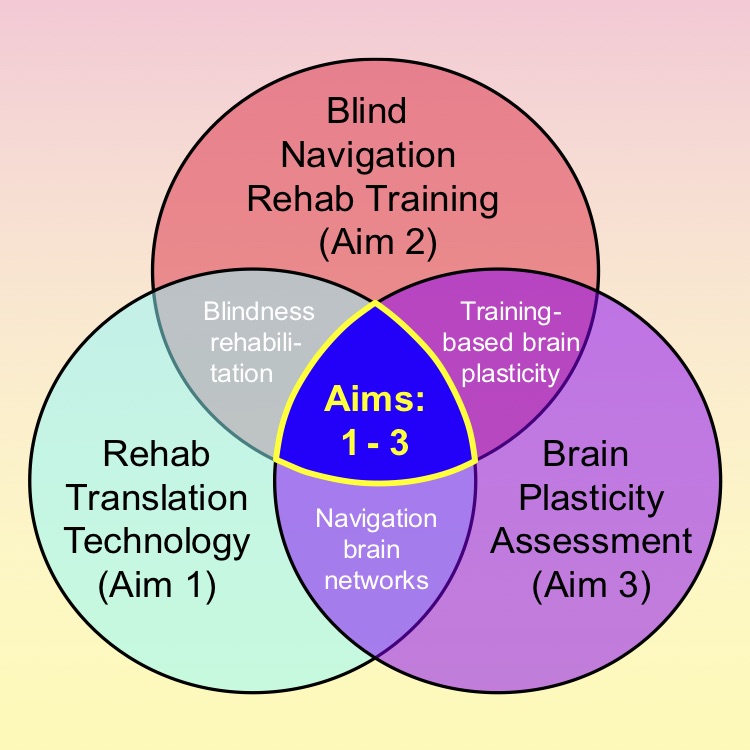
Successful navigation requires the development of an accurate and flexible mental, or cognitive, map of the navigational space and of the route trajectory required to travel from the current to the target location. The Cognitive-Kinesthetic (C-K) Rehabilitation Training that we have developed in the preceding period utilizes a unique form of blind memory-guided drawing to develop cognitive mapping to a high level of proficiency.