Publication Types
Abstract
Background: Central visual field loss (CFL) is the most common irreversible visual impairment in aging and is associated with higher fall risk and concerns about falling. This study explored the links between CFL severity, functional balance, and walking-related attentional processing implicated in reduced gait performance.
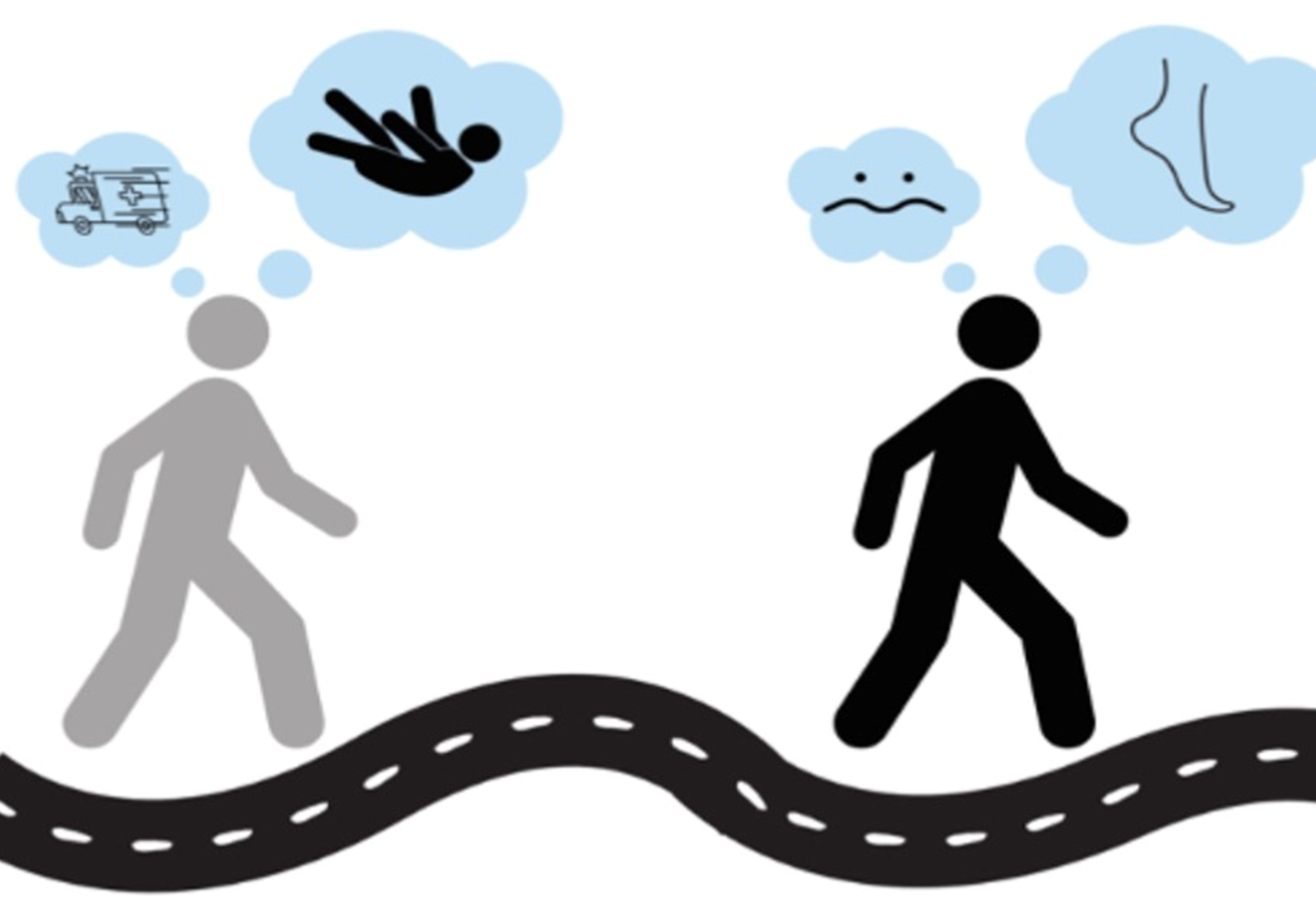
Methods: In Study 1, 29 individuals with CFL and 29 age-matched controls completed the Timed Up and Go (TUG) test. In Study 2, 10 CFL participants and 10 controls performed the TUG while acceleration data were collected from head and trunk IMUs. For both studies, we assessed visual impairment severity (contrast sensitivity) and participants’ attentional processing during walking (Gait-Specific Attentional Profile, G-SAP).
Results: Both groups showed positive correlations between TUG duration and G-SAP subscales. G-SAP scores were lower in CFL participants with worse contrast sensitivity indicating reduced cognitive processing during walking. Worse contrast sensitivity was also associated with greater head and trunk acceleration and acceleration variability during walking, suggesting reduced gait stability. Higher rumination and conscious movement processing scores also correlated with improved segmental control in CFL.
Significance: Increased cognitive processing of gait is associated with impaired functional balance. This association appears to be reversed in CFL, with severe visual deficit diverting cognitive resources from movement control. This altered strategy may prioritise the acquisition and processing of visuospatial information in CFL. The observed postural instability with increasing CFL severity and a lack of excessive cognitive involvement in movement control suggest heightened gait-specific attention could be leveraged for balance and gait training in CFL.
Journal
Gait & PostureYear of publication
01/2026