Publication Types
Abstract
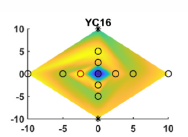
Stereoacuity, the ability to perceive depth from binocular disparity, is traditionally considered to be best at the fovea in typical human vision, and to decline with eccentricity. Previous studies have shown that when stereopsis is present in amblyopia, it is often coarse and comparable to stereoacuity associated with the peripheral retina in neurotypical controls, suggesting that it might be mediated by a non-foveal locus. Here we measured stereoacuity as a function of eccentricity in participants with amblyopia as well as controls with no history of abnormal visual development. We measured stereoacuity using random dot stereograms and targets that scaled with eccentricity, testing the fovea, and eccentricities of 2.5°, 5°, and 10° along the horizontal and vertical meridians. For 87.5% (7/8) of amblyopic participants, the locus of best stereoacuity was non-foveal. Surprisingly, 75% of control participants (15/20) also exhibited their best stereoacuity at non-foveal locations, with only 5 controls showing foveal superiority. Using stimulus parameters modified to improve foveal performance, we repeated measurements on a subset of controls whose best stereoacuity was non-foveal, but the best locus only shifted to the fovea in one participant. Stereoacuity measured at the experimentally determined “best locus” correlated well with standard clinical stereoacuity tests. These findings challenge the conventional view of universal foveal dominance for stereopsis, suggesting that the fovea is not invariably the site of best stereoscopic sensitivity, even in many normally sighted individuals. This has implications for understanding binocular vision in amblyopic and normal vision, and for interpreting clinical stereo tests.
Journal
Vision ResearchVolume
240Year of publication
2026