Principal Investigator:
Contact Information:
Email: coughlan@ski.org
Mobile Phone: (415) 345-2146
2318 Fillmore St.
San Francisco, CA 94115
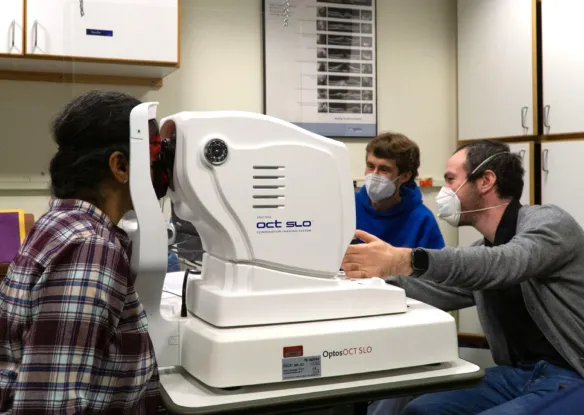
The goal of our laboratory is to develop and test assistive technology for blind and visually impaired persons that is enabled by computer vision and other sensor technologies.

Publications




Projects
SKribbleEyes
Scribble Eyes is an Apple iPad/Pencil-based app that automates the data collection, analysis and interpretation process for paper-based tests traditionally used to screen patients with central visual field loss in the clinic.
Audiom Map of Smith-Kettlewell
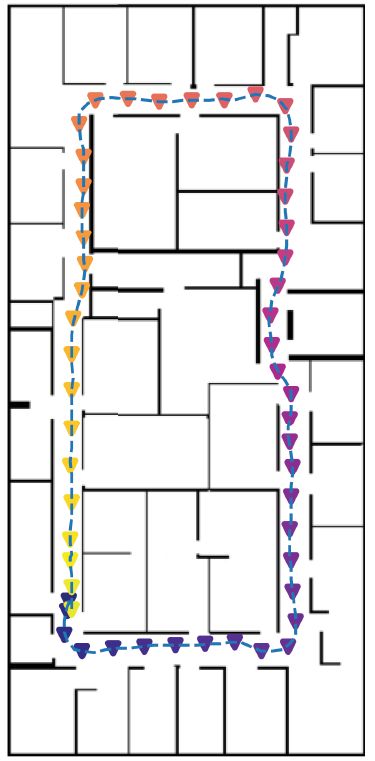
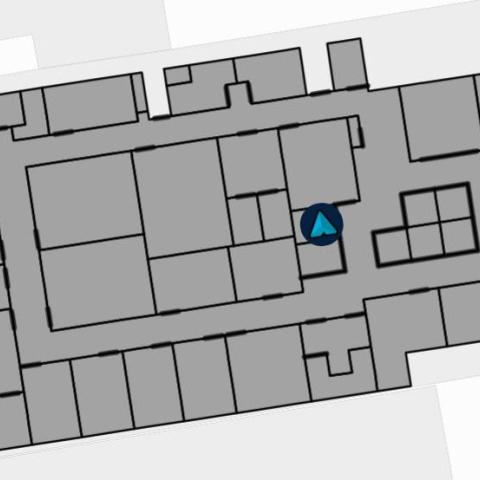
An Audiom map of the main Smith-Kettlewell building at 2318 Fillmore St., San Francisco has been created by Brandon Biggs. This is an audio-visual map that allows users to explore a detailed map of the building with or without vision. The map runs in any browser and is available to anyone who visits the building.
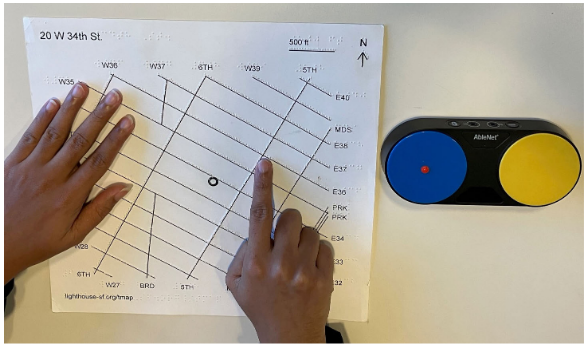
MapIO: a Gestural and Conversational Interface for Tactile Maps
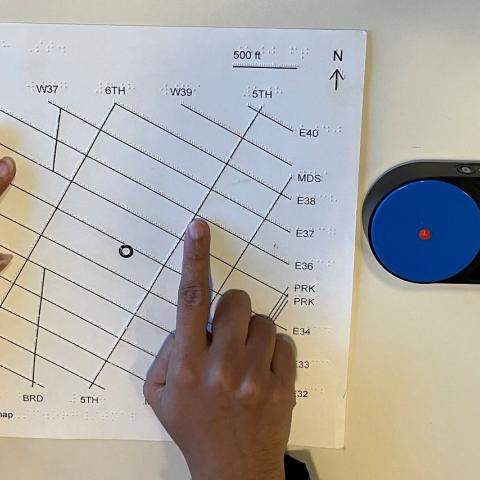
For individuals who are blind or have low vision, tactile maps provide essential spatial information but are limited in the amount of data they can convey. Digitally augmented tactile maps enhance these capabilities with audio feedback, thereby combining the tactile feedback provided by the map with an audio description of the touched elements. In this context, we explore an embodied interaction paradigm to augment tactile maps with conversational interaction based on Large Language Models, thus enabling users to obtain answers to arbitrary questions regarding the map. We analyze the type of…
Using VR to Help Train Visually Impaired Users to Aim a Camera
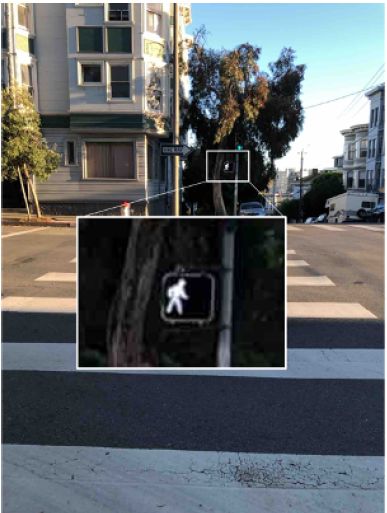
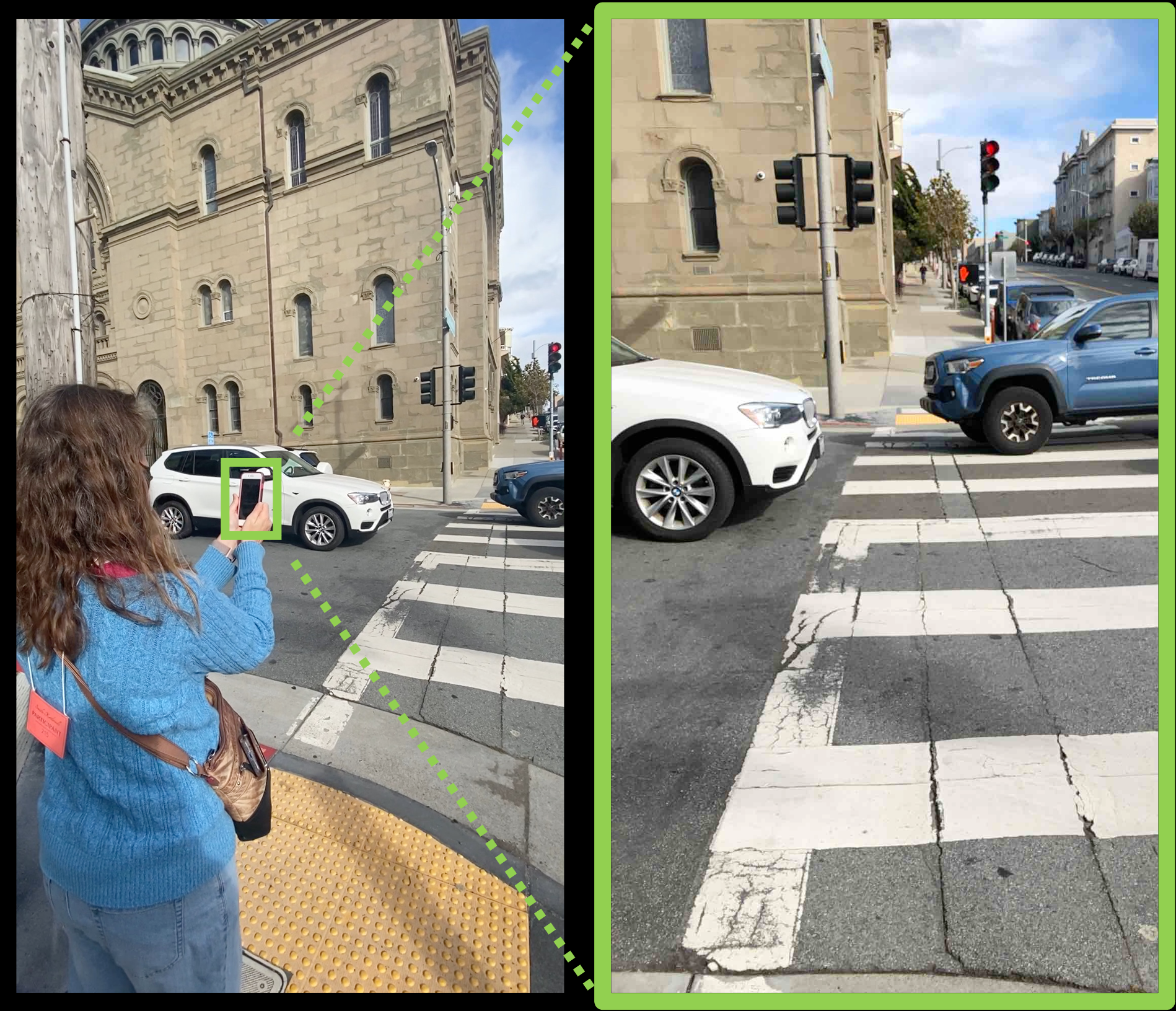
People with visual impairments increasingly rely on camera-enabled smartphone apps for tasks like photography, navigation, and text recognition. Despite the growing use of these applications, precise camera aiming remains a significant challenge. This project explores the impact of virtual reality (VR) exploration in the context of learning to use a camera-based app. So far we have studied this approach in the context of training a visually impaired person to use walk-light detector app at traffic intersections.
CamIO Hands
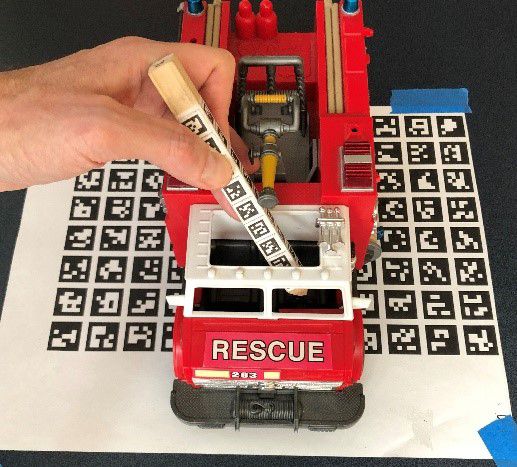
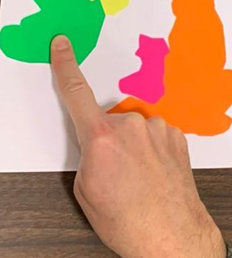
This project builds on the CamIO project to provide point-and-tap interactions allowing a user to acquire detailed information about tactile graphics and 3D models.
The interface uses an iPhone’s depth and color cameras to track the user’s hands while they interact with a model. When the user points to a feature of interest on the model with their index finger, the system reads aloud basic information about that feature. For additional information, the user lifts their index finger and taps the feature again. This process can be repeated multiple times to access additional levels of…
Magic Map
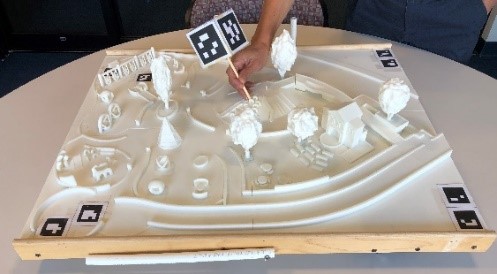
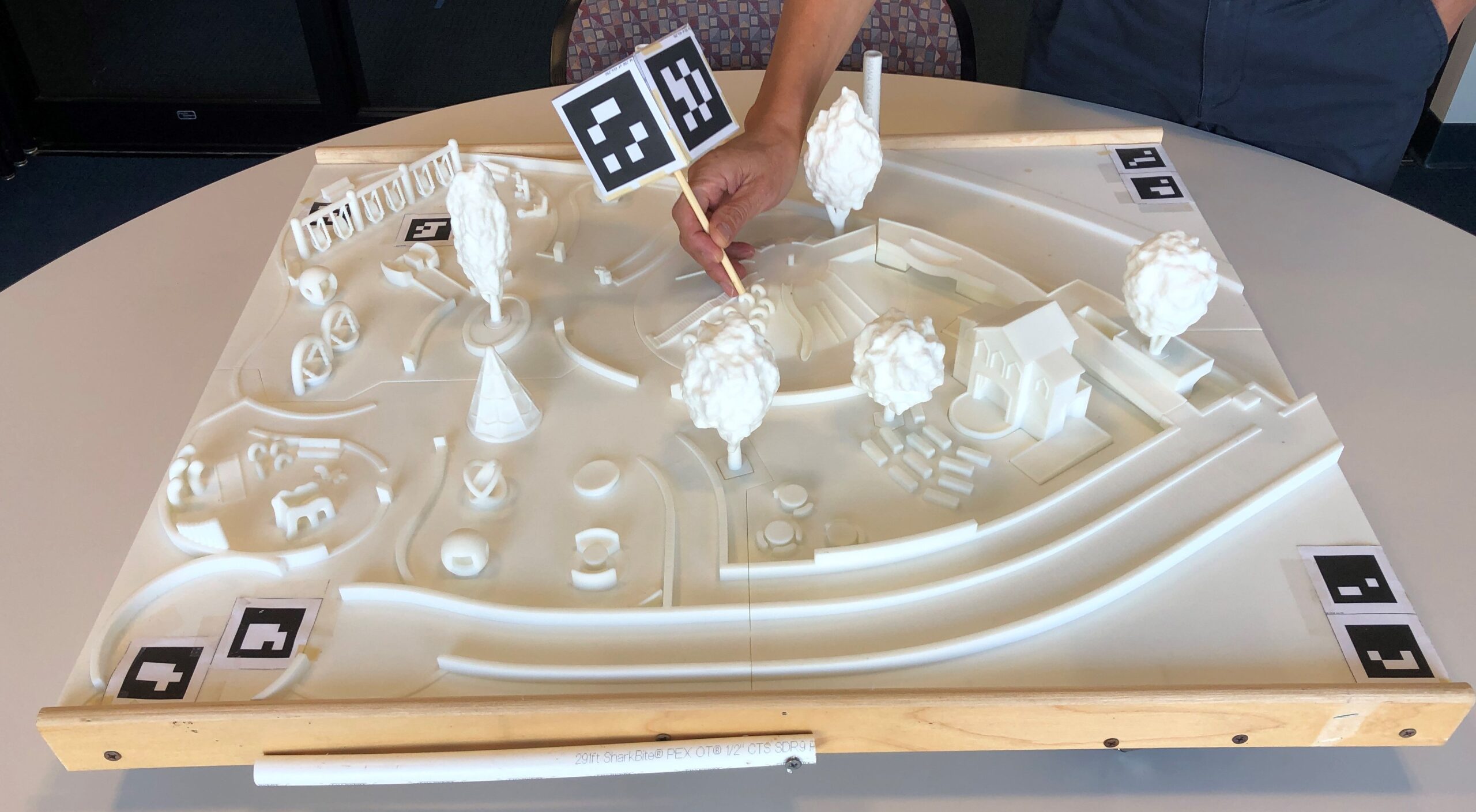
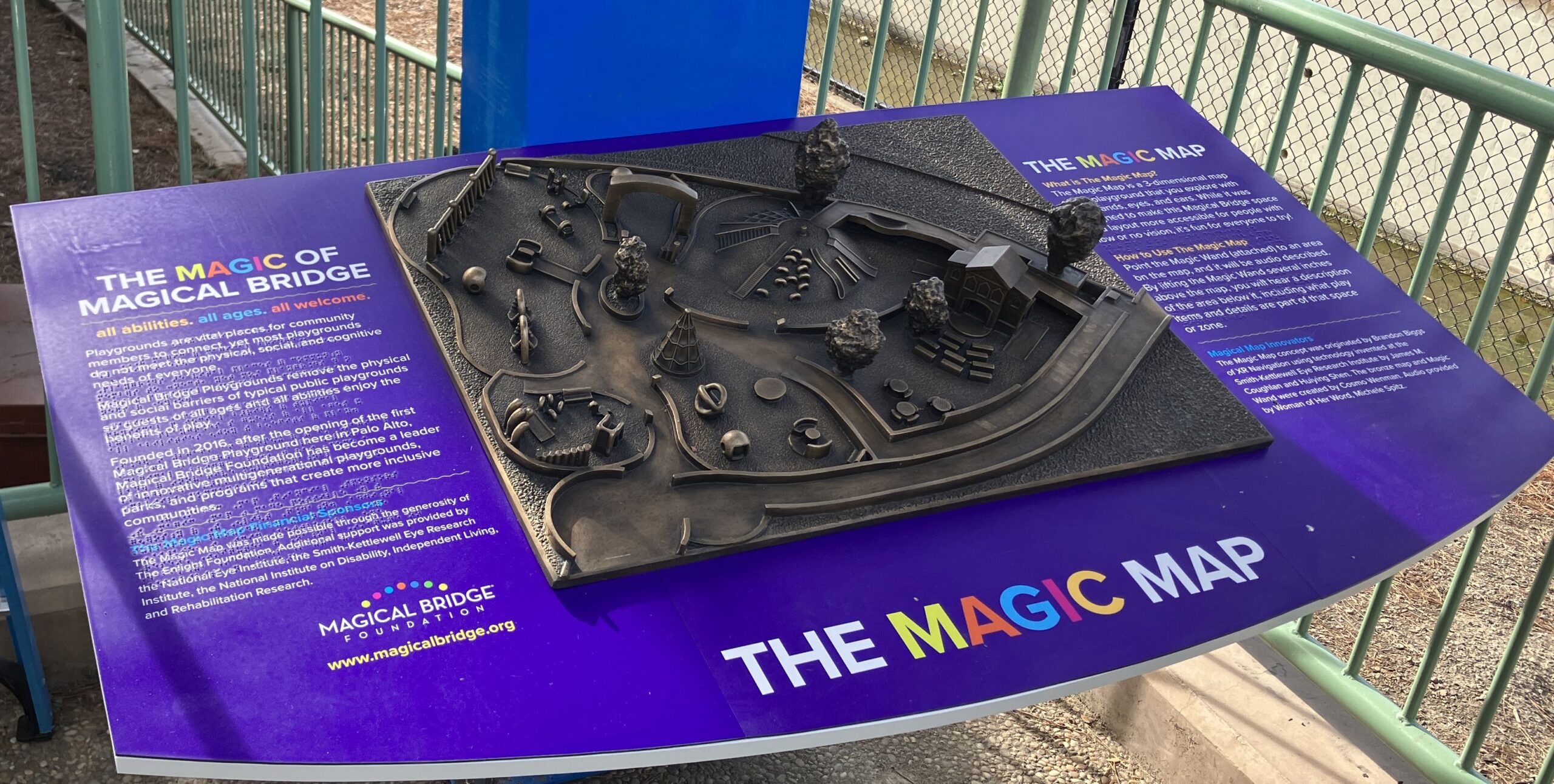
The Magic Map is an interactive 3D map installed at the Magical Bridge Playground in Palo Alto, California. It consists of a 1/100 scale 3D bronze representation of the playground, which includes over seventy play structures organized into multiple play zones and paths. When the user’s index fingertip touches a specific feature on the map, the name and description of the feature are read aloud in audio. This interactivity allows visitors with visual impairments to navigate the map without requiring them to read braille.
Outreach at Smith-Kettlewell
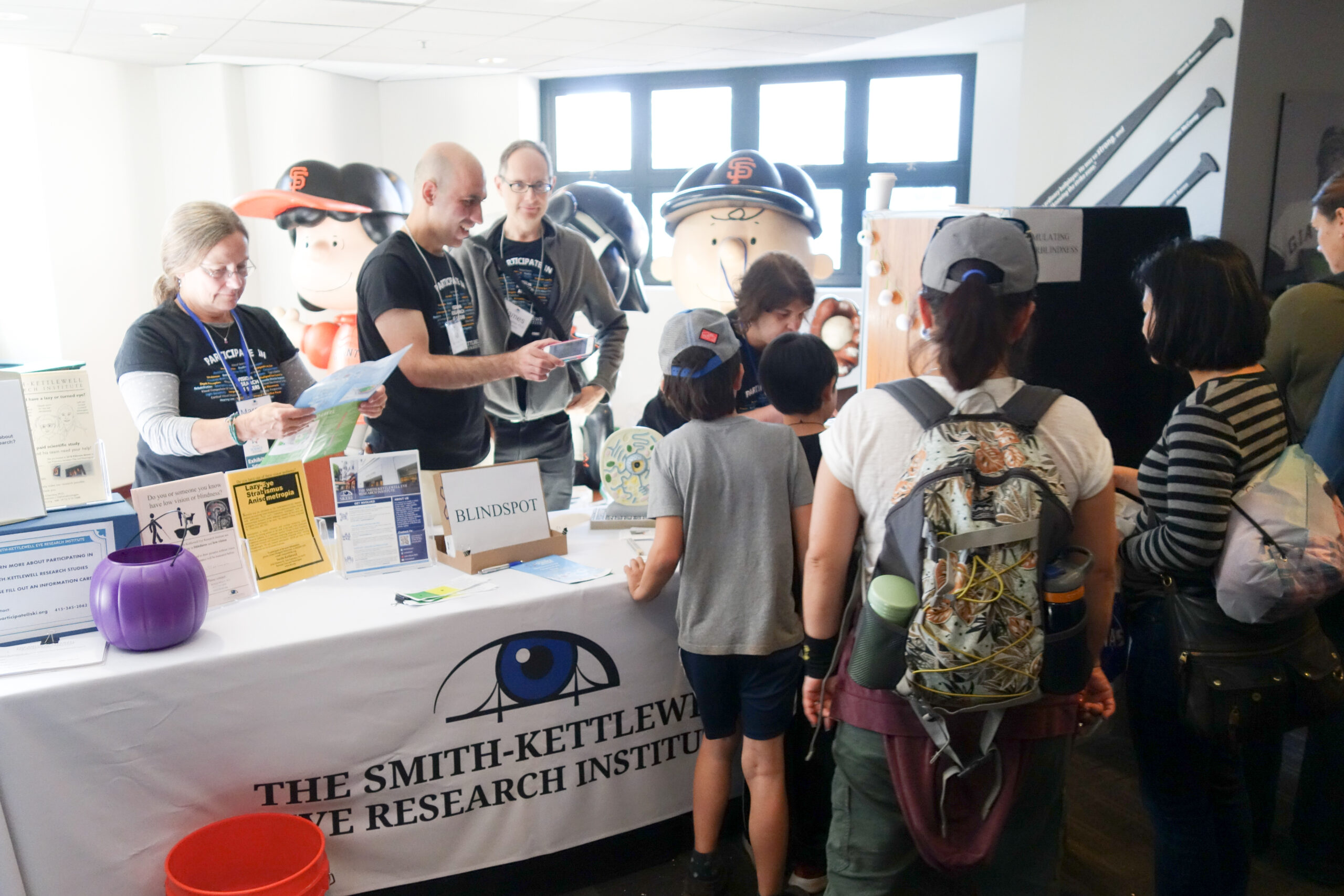
Smith-Kettelwell is deeply committed to supporting our community.
Please see the news tab for our upcoming and ongoing events. In the News tab, you will find information about our involvement in past outreach activities.
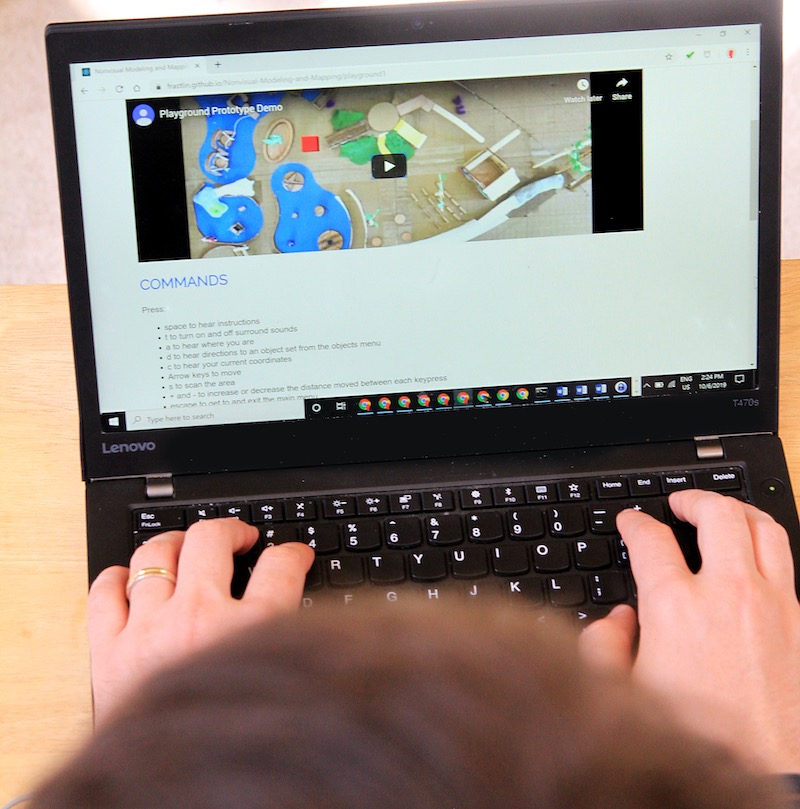
Audiom
Audiom is a tool that allows blind and visually impaired individuals to view maps completely in audio. It is a web component and can be embedded into any webpage, similar to Google Maps. It allows non-visual use of route, landmark, and survey knowledge, which is the critical information needed for navigation.
Blindness and Low Vision Support Group
Join Annemarie Rossi, Occupational Therapist, and scientists at Smith-Kettlewell to share experiences and learn about resources for members of the blind and low vision community through the Blindness and Low Vision Support Group, founded by Dr. Donald Fletcher, M.D.
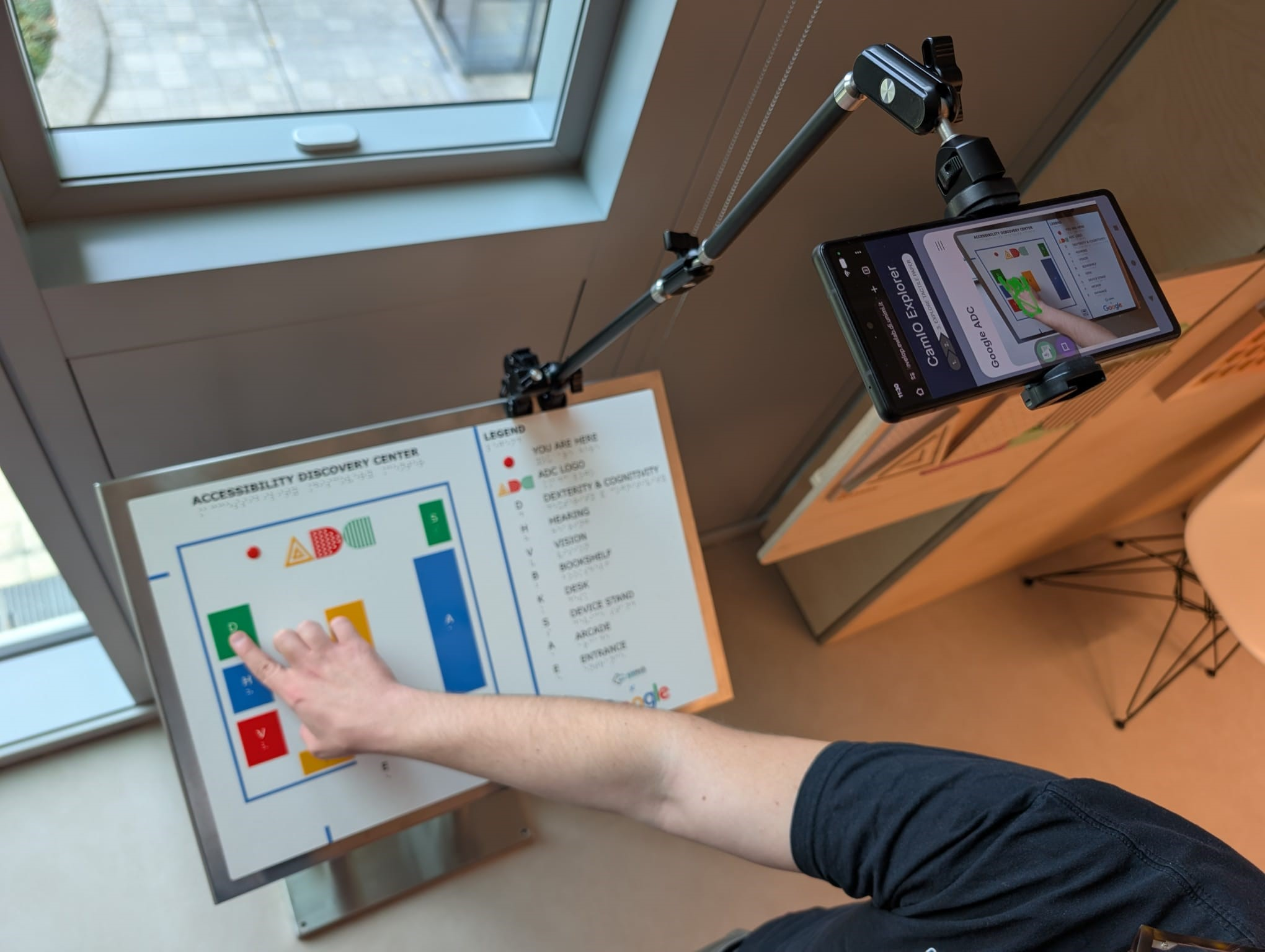
Interactive Tactile Map at Google ADC Milan
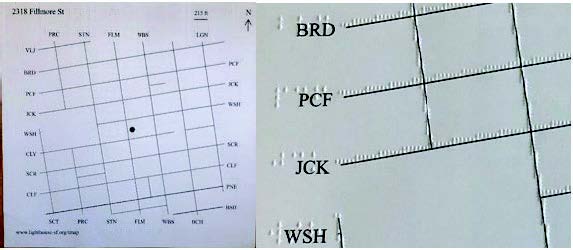
This is an installation of the CamIO project that adds interactivity to a tactile map of the Google Accessibility Discovery Center in Milan, Italy.
Smith-Kettlewell Summer Institute
The Smith-Kettlewell Summer Institute program is a multi-year, learning opportunity designed to provide training for blind and visually impaired students, recent graduates, and early career researchers interested in data skills that will enhance Science, Technology, Engineering and Math (STEM) jobs within industry, government, non-profit organizations or academia.
In today’s research climate, individuals are expected to have many skills at their fingertips. Often researchers are required to build software and hardware environments to run studies, to gather and analyze data and to prepare…
Crosswatch
Crosswatch is a smartphone-based system developed for providing real-time guidance to blind and visually impaired travelers at traffic intersections. Using the smartphone’s built-in camera and other sensors, Crosswatch is designed to tell blind and visually impaired travelers what kind of traffic intersection they are near, how to align themselves properly to the crosswalk, and when the walk light or other traffic light indicates it is time to cross.
Click here for link to zip file containing Crosswatch code (open source) and documentation.
Centers
 Rehabilitation Engineering Research CenterThe Center's research goal is to develop and apply new scientific knowledge and practical, cost-effective devices to better understand and address the real-world problems of blind, visually impaired, and deaf-blind...

People
Current People
 Charity Pitcher-CooperPronouns: she/her I joined The Smith-Kettlewell Rehabilitation Engineering Research Center (RERC) team in 2017 as an assistant to scientist Dr. […]


Collaborators
Internal Collaborators


External Collaborators


News
 Oakland High School’s Students Visit Smith-KettlewellOn Friday, February 6th, students from Oakland High School's Innovative Design and Engineering Academy visited Smith-Kettlewell. Students learned about different kinds of accessibility research directly from some of our scientists, giving...
 Empowering Data Vision: A Self-Paced Introduction to the Convergence of AI and Data ScienceJuly 25, 2025 — San Francisco, CA
 Brandon Biggs and XR Navigation Are Making HistoryHistory has been made!
 SKERI Scientists Join the IGNITE STEM Fair at Burton High SchoolOn April 18, 2024 SKERI scientists enjoyed the beautiful Phillip and Sala Burton Academic High School campus while offering its students hands-on, experiential, and interactive examples of SKERI's scientists' work.
 SKERI Researchers Bring their Rehabilitation and Assistive Technology to CSUN Tech ConferenceSmith-Kettlewell’s Rehabilitation Engineering Research Center (RERC) on Blindness and Low Vision, funded by the National Institute on Disability, Independent Living and Rehabilitation Research (NIDILRR ), supports eight projects related to visual...
 CamIO Receives Supplement to Enhance Software Tools for Open ScienceDr. James Coughlan has been awarded funds to increase access to his CamIO tool for making objects accessible to blind and visually impaired persons. The funds were part of NIH's Notice of Special Interest for...
 SKERI Receives Rehabilitation Engineering Research Center (RERC) grant on Blindness and Low VisionSmith-Kettlewell is proud to announce the newly awarded Rehabilitation Engineering Research Center (RERC) grant on Blindness and Low Vision. This is a five-year grant from the National Institute on Disability,...


Events

Blindness and Low Vision Support Group: December 2026 Meeting
Wednesday, December 16th, 2026 – 3:30 PM to 5:00 PM
A description will be provided at a later date.
Blindness and Low Vision Support Group: Peer Discussion & Show and Tell
Wednesday, November 18th, 2026 – 3:30 PM to 5:00 PM
This November, we invite you to show off some of the blindness and low vision tips, tricks, and tools that...
Blindness and Low Vision Support Group: October 2026 Meeting
Wednesday, October 21st, 2026 – 3:30 PM to 5:00 PM
A description will be provided at a later date.
Blindness and Low Vision Support Group: September 2026 Meeting
Wednesday, September 16th, 2026 – 3:30 PM to 5:00 PM
A description will be provided at a later date.
Get Involved
If you are interested in vision science or want to learn more about low vision and blindness, there are many opportunities to get involved at The Smith-Kettlewell Eye Research Institute.