
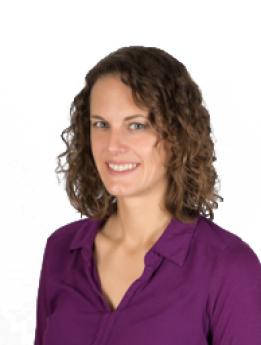
Senior Visual Experience Engineer,
Apple, Inc.
Dr. Walker completed her BS in Chemical Engineering at MIT and PhD in Vision Science at UC Berkeley. At Berkeley, she studied with Dr. Jitendra Malik using psychophysics to validate computer vision algorithms. During her postdoctoral training with Drs. Preeti Verghese and James Coughlan at Smith-Kettlewell, she developed a computational model of eye movements and continued to apply and develop these models to predict how changing eye movements can improve vision for people different retinal diseases as a PI at SKERI. Her most recent project examined the impact of central vision loss on eye-hand coordination, with the ultimate goal to take what is learned in the laboratory and translate it into low vision rehabilitation therapies.
Links:
PublicationsPublications


Projects
- CompletedParafoveal Crowding
Crowding increases with eccentricity, and is most readily observed in the periphery. During natural, active vision however, central vision plays an important role. Measures of critical distance to estimate crowding are difficult in central vision, as these distances are small. Any overlap of flankers with the target may create an overlay masking confound. The crowding factor method avoids this issue by simultaneously modulating target size and flanker distance and using a ratio to compare crowded to uncrowded conditions. This method was developed and applied in the periphery (Petrov &…
 InactiveState of the Science Conference On Rehabilitation Technology & Methods For a Changing Population
Date: Friday, December 4, 2015
Location: The Smith-Kettlewell Eye Research Institute, 2318 Fillmore St., San Francisco CA 94115
The goal of this invitation-only conference was to identify needs for future research in rehabilitation technology, methods for the blind and visually impaired population, and those with dual sensory loss.
Program:
8:45 – 9:15 Check-in and coffee/pastries9:15 – 9:25 Welcome
9:25 – 9:45 Keynote: Paul Schroeder (link to YouTube video)
9:45 – 10:45 Panel 1: Changing Populations. How should we change our approach to assessing and addressing visual impairments? (link to YouTube…
 CompletedSKERI-VF
Walker et al (Renninger, Psomadakis, Dang & Fletcher, 2008) suggested a novel method to estimate the monocular scotoma area from perimetry data in macular degeneration based on (i) an optic-disc based estimation of the location of the fovea and (ii) the increase in the receptive field size with eccentricity. Here, Dr Walker and I introduce a new GUI that applies this method to data from the Optos OCT/SLO.
- CompletedImpact of Eye Movements on Reach Performance
Aim 2 of Reaching with Central Field Loss
- CompletedReaching with Central Field Loss
Parent R01