Publications




Projects

Binocular rivalry as a detection tool for amblyopia
The project aims to develop a rapid, objective vision screening tool for identifying amblyopia in preschool children using abnormal binocular rivalry dynamics. Amblyopia is a leading cause of monocular vision loss, affecting 3.3% of the US population. Early intervention before age 7 yields better outcomes, making a scalable screening test for preschoolers an unmet public health need.
We investigate abnormal binocular rivalry dynamics as a behavioral biomarker for amblyopia in adults, exploring diagnostic power in a patient sample and determining the minimum rivalry data collection duration for…
Vergence and Stereopsis in Amblyopia & Strabismus
Vergence to disparity targets in the central visual field is impaired in individuals with amblyopia and strabismus.
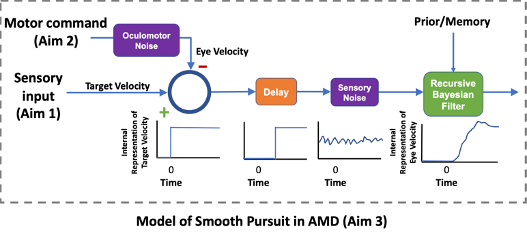
Modeling Smooth Pursuit Eye-Movement Deficits in Macular Degeneration
The project investigates the deficits in smooth pursuit in individuals with age-related macular degeneration within the framework of a Bayesian model.
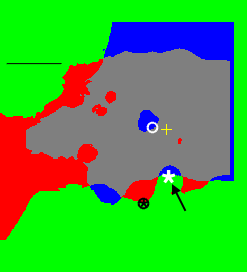
Stereopsis in Macular Degeneration
Macular degeneration affects the central retina, often causing asymmetrical damage to the two eyes. How does this asymmetrical loss affect stereopsis — the percept of depth generated by the small separation of image features in the two eyes?
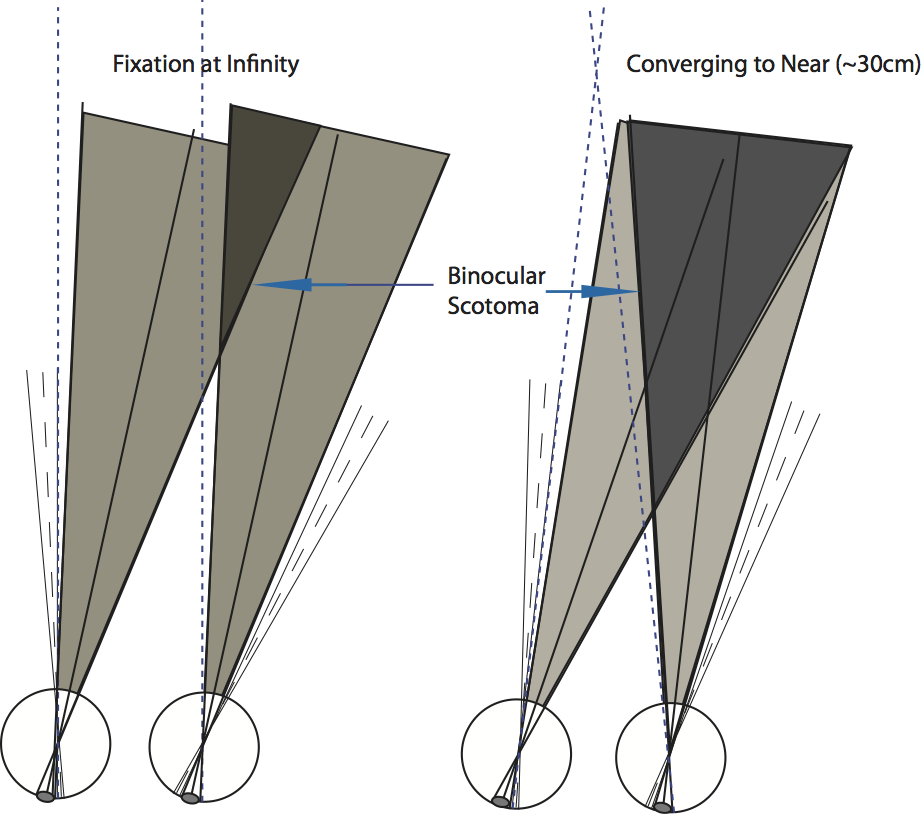
Tracking a target in depth with central field loss
Bilateral field loss due to maculopathy creates a scotoma that extends in depth — a volume scotoma. Morevoer the size of the scotoma depends on whether observers turn their eyes to track a target as it comes closer. This project investigates how the volume scotoma affects the ability to track oncoming targets in these individuals, and in controls with a simulated volume scotoma.

Blindness and Low Vision Support Group
Join Annemarie Rossi, Occupational Therapist, and scientists at Smith-Kettlewell to share experiences and learn about resources for members of the blind and low vision community through the Blindness and Low Vision Support Group, founded by Dr. Donald Fletcher, M.D.
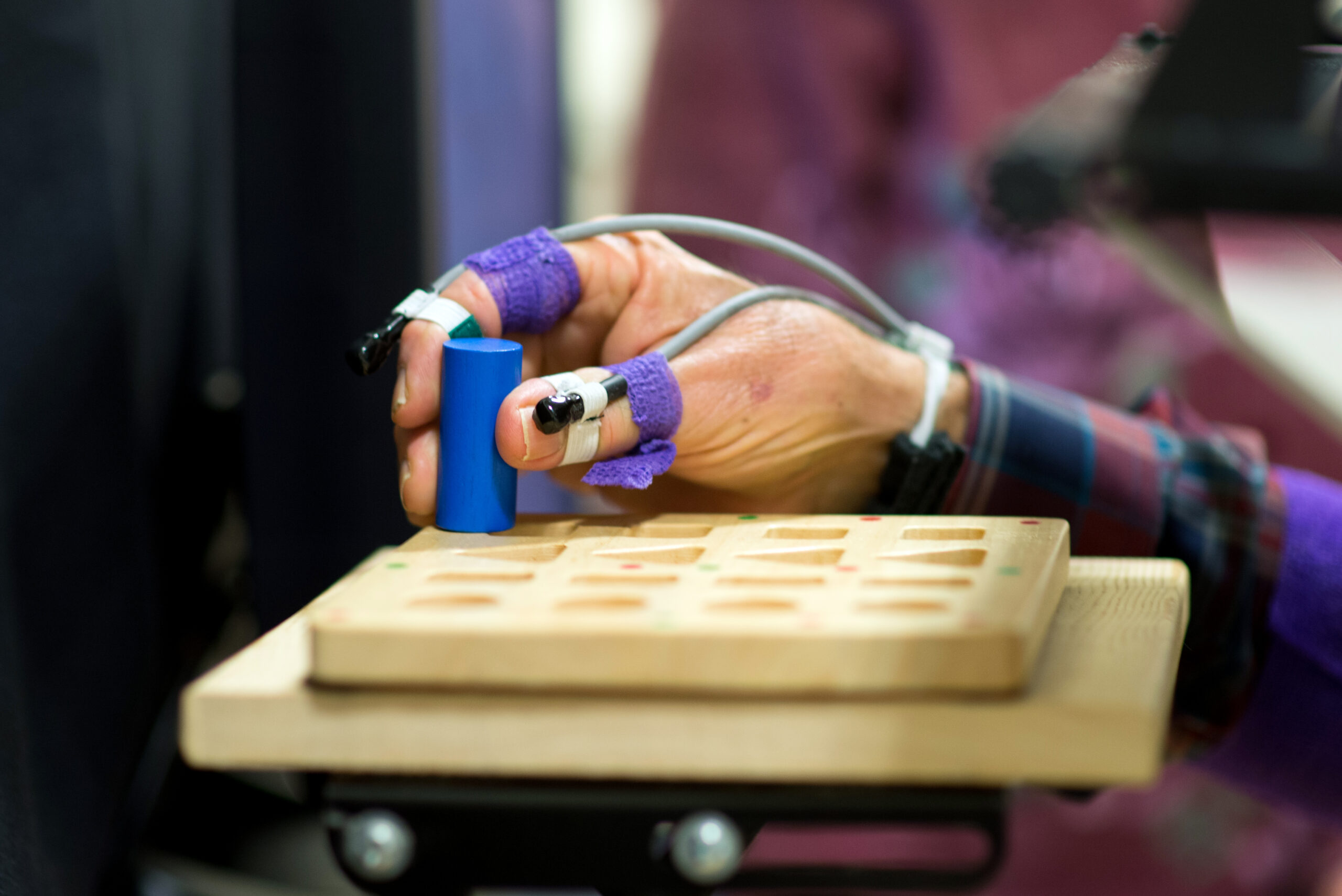
Adaptive Visual Strategies for Individuals with Macular Degeneration
In this project we try to gain a better understanding of what visual strategies people use to gather information in the world.

Fovea Use During Smooth Pursuit
There is continuing debate as to whether smooth pursuit relies on the foveation of a moving target, especially when the target is compact. Previous studies have shown that gaze is placed on the center-of-mass of a target during saccadic eye movements. This research aims to understand whether eye placement is similarly centered during smooth pursuit and whether foveation is necessary for pursuing a small stimulus.
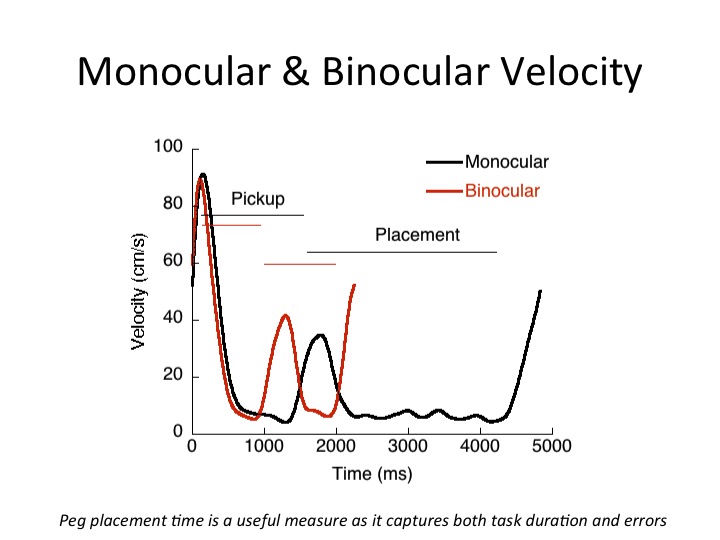
Eye-Hand coordination in Central Field Loss
Eye-hand coordination in AMD
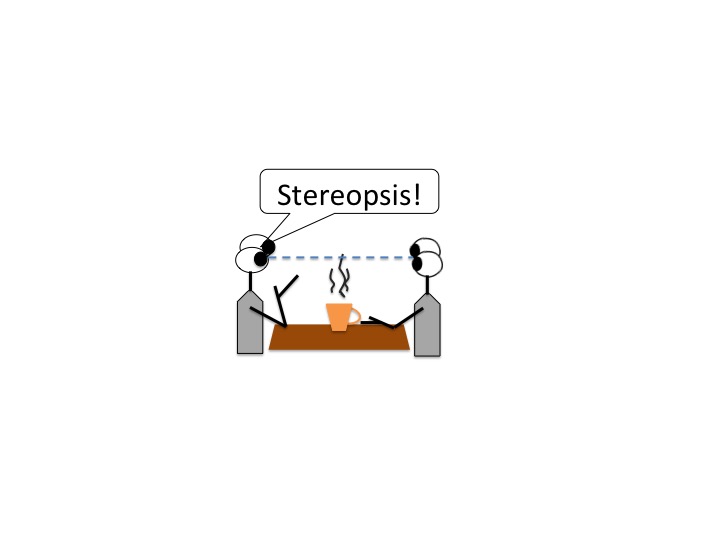
Upper Depth Limit Across Visual Field
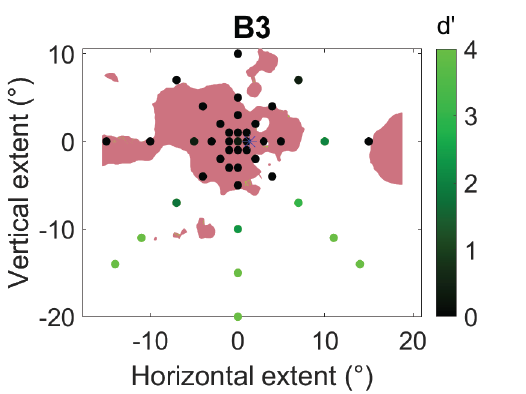
Stereopsis is important for tasks of daily living such as eye-hand coordination. It is best in central vision but is also mediated by the periphery. Previously we have shown that individuals with central-field loss who have residual stereopsis in the periphery perform better at an eye-hand-coordination task. Here we sought to determine what sets the limit of stereopsis, defined as the largest disparity that supports the sustained appearance of depth, in the near periphery in healthy individuals.

Motion Perception in Central Field Loss
The project investigates motion perception in individuals with vision loss due to central retinal lesion, but who retain healthy peripheral retina. Healthy peripheral retina is exquisitely sensitive to fast speeds, however, there is limited and conflicting information about motion processing in residual peripheral retina in patients with central field loss, often due to macular degeneration. We use psychophysical and eye tracking approaches to systematically probe speed and direction sensitivity in this population.

Characteristics of Smooth Pursuit in Individuals with Central Field Loss
This project investigates the properties of smooth pursuit eye movements in individuals with macular degeneration. Commonly believed to be a fovea-linked eye movement, smooth pursuit has not been previously investigated in individuals with central field loss, despite its importance for tracking moving objects, such as vehicles or pedestrians on a busy street.
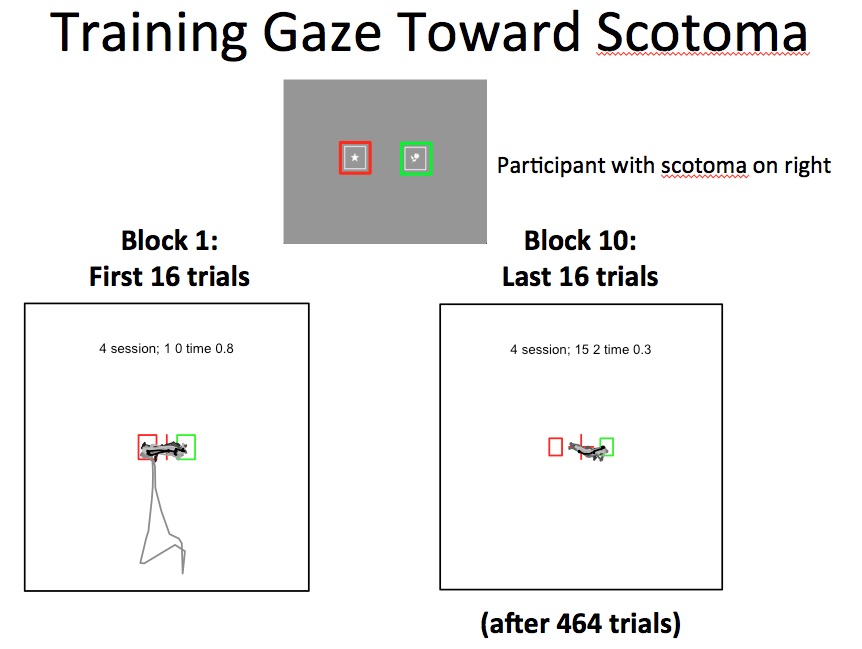
Novel Method to Teach Scotoma Awareness
This project aims to improve visual function in individuals with age-related macular degeneration (AMD). AMD isassociated with central field loss that cannot be corrected optically. Individuals with AMD are often unaware of their scotoma and their eye movements follow more random patterns, compared to adults with healthy vision. With funding from the National Institutes of Health and Pacific Vision Foundation, we are training indviduals with AMD to direct their eye movements into their scotoma, so that they can sample missing information.
Strategies for Efficient Visual Information Gathering
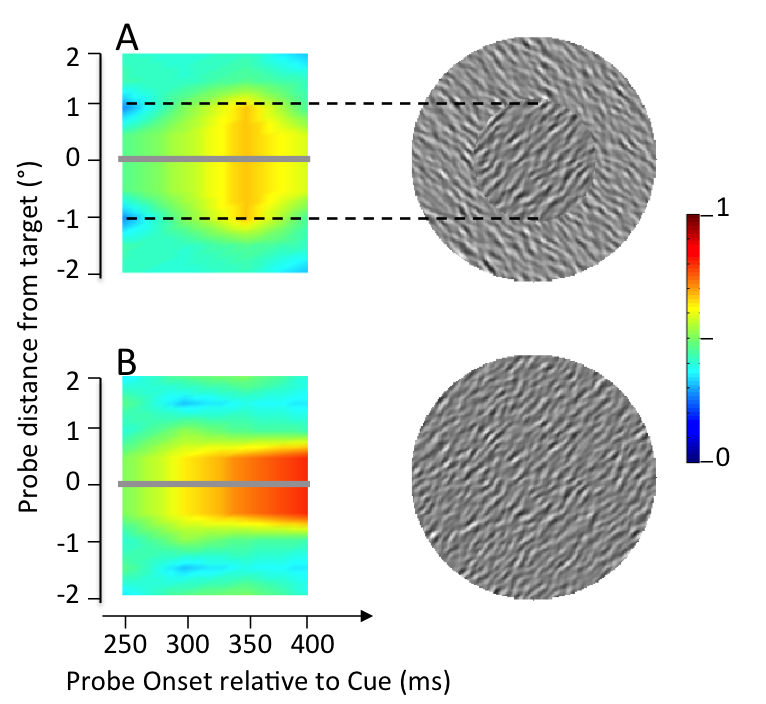
Active visual search
Target Selection in the Real World
Attention and Segmentation
Centers
 Rehabilitation Engineering Research CenterThe Center's research goal is to develop and apply new scientific knowledge and practical, cost-effective devices to better understand and address the real-world problems of blind, visually impaired, and deaf-blind...
People


Funding
Collaborators


News
 Oakland High School’s Students Visit Smith-KettlewellOn Friday, February 6th, students from Oakland High School's Innovative Design and Engineering Academy visited Smith-Kettlewell. Students learned about different kinds of accessibility research directly from some of our scientists, giving...
 Smith-Kettlewell Eye Research Institute to Illuminate Adaptive Strategies in Vision Impairment at IMRF SymposiumThe Smith-Kettlewell Eye Research Institute played a key role at this year's International Multisensory Research Forum (IMRF) in Reno, Nevada, beginning June 17, 2024. An all-SKERI symposium "Shifting Sensory Reliance:...
 SKERI Scientists Present Groundbreaking Research at the 24th Annual Vision Sciences Society MeetingThe Smith-Kettlewell Eye Research Institute (SKERI) is proud to announce its extensive participation in the 24th Annual Meeting of the Vision Sciences Society (VSS), held from May 17 to May...
 Exciting Research on Vision Presented at ARVO 2024 ConferenceResearchers from the Smith Kettlewell Eye Research Institute are set to unveil their newest findings at the upcoming Association for Research in Vision and Ophthalmology (ARVO) Annual Meeting in Seattle,...
 SKERI Scientists Join the IGNITE STEM Fair at Burton High SchoolOn April 18, 2024 SKERI scientists enjoyed the beautiful Phillip and Sala Burton Academic High School campus while offering its students hands-on, experiential, and interactive examples of SKERI's scientists' work.
Events
No upcoming events found.
Explore More
Get Involved
If you are interested in vision science or want to learn more about low vision and blindness, there are many opportunities to get involved at The Smith-Kettlewell Eye Research Institute.